What Is an Acrylic Light Box and How Does It Work

You can find an acrylic light box in many places. This device has acrylic panels and lights inside. It makes bright and even light. You see its soft glow in crowded areas. People use a light box in airports, malls, hotels, and restaurants. These places use light boxes to help travelers and shoppers. They also make spaces feel friendly. The world market for light boxes is growing fast. This shows they are important for ads and sharing information.
Key Takeaways
Acrylic light boxes have acrylic panels and LED lights. They make displays look bright and even. These displays catch people’s eyes in busy places.
These light boxes are strong and not heavy. They do not cost a lot. This makes them good for businesses and homes.
Pick the right kind of light box for your needs. Edge-lit boxes look modern. Backlit boxes are very bright.
Acrylic light boxes can be used in many ways. You can change them for different uses. They work for business signs or home decorations.
LED lights in these boxes last a long time. They can work up to 100,000 hours. This helps you save money on power and fixing them.
Acrylic Light Box Basics
What Is an Acrylic Light Box
You can see an acrylic light box in many places. It uses acrylic panels and lights inside to make a bright glow. People use it to show pictures, words, or ads. The acrylic panels spread the light so images look clear and bright. You find these boxes in airports, stores, and restaurants. They help make signs easy to read and grab your attention. Many businesses pick acrylic light boxes because they work well in busy spots and last a long time.
Tip: Acrylic panels in these boxes can last five years or more outside. They stay strong and clear, even in bad weather.
Key Features
When you look at an acrylic light box, you see some important things. These things make it a good choice for signs and displays.
Acrylic panels make graphics bright and clear.
The box is light, so it is easy to put up.
The materials cost less, so businesses save money.
You can get many shapes and sizes to fit your space.
You can add your logo, graphics, and colors to the box.
Here is a table that shows why acrylic is a smart choice for light boxes:
Property | Description |
|---|---|
Durability | Acrylic can handle tough weather and sunlight. |
Lightweight | Easy to move and install, so it works well for light boxes. |
Optical Clarity | Lets you see clearly, so light boxes look better. |
Cost-Effectiveness | Costs less than glass and other materials. |
You have choices for how to set up your light box. Some use SEG methods for a modern style. Others use snap frames so you can change pictures fast. You can pick the style that fits what you need.
Acrylic light boxes last about three to five years. LED lightboxes can last up to 100,000 hours, which is almost eleven years. You do not need to check LED lightboxes often, so you save time and money.
How Does a Light Box Work
Light Diffusion and Illumination
You might wonder how a light box creates such a smooth, glowing effect. The secret lies in the way it spreads light across the illuminated surface. Acrylic panels play a big role. These panels let light pass through easily and spread it out evenly. When you use frosted or translucent acrylic, you avoid harsh spots and glare. This makes your images or signs look bright and clear from every angle.
LED lights sit behind or along the edges of the acrylic. They shine light into the panel. The acrylic then diffuses the light, so you do not see any bright dots or dark corners. This process mimics natural daylight. It helps reduce harsh shadows and makes colors look true. You get a professional look for your artwork, photos, or signs.
Note: Thicker acrylic panels give you more even light, but they can make the display a bit dimmer. Thinner panels let more light through, but you might see some bright spots.
Here is a table that shows how LED light boxes compare to traditional light sources:
Feature | LED Light Boxes | Traditional Light Sources |
|---|---|---|
Light Diffusion | Excellent light transmission and diffusion | May not provide uniformity and brightness |
Energy Efficiency | More energy-efficient | Less energy-efficient |
Lifespan | Longer lifespan | Shorter lifespan |
You get several benefits from using acrylic and LED technology:
Acrylic offers excellent light transmission.
It diffuses LED hot spots, so your display looks smooth.
It is easy and inexpensive to shape and use.
LED lightbox posters look brighter and stand out in busy places.
Main Components
Acrylic light boxes have a few main parts. Each part helps create the even, glowing effect you see.
Acrylic Panel: This is the front face of the box. It spreads the light and makes the display look bright. The type of acrylic you choose affects how even and clear the light appears.
LED Lights: These lights sit behind or along the edges of the acrylic. LEDs use very little power and last a long time. They give you even illumination without dark spots.
Frame or Housing: This holds everything together. It protects the lights and acrylic panel. You can find frames in many shapes and sizes.
Backing Board: This part supports the graphics or artwork. It also helps reflect light back through the acrylic, making the display brighter.
You can see how each part works together:
Acrylic panels provide excellent light diffusion. They help eliminate harsh spots and glare.
LED technology ensures minimal power use. You save money on energy and maintenance.
The frame keeps the box sturdy and safe.
Tip: For the best results, aim the light at a 30-degree angle from vertical. This reduces glare and gives you even illumination. If you display textured artwork, a 25-degree angle can add depth and make the piece stand out.
When you ask, "how does a light box work," you now know that the answer lies in the smart use of acrylic and LED lights. These parts work together to create an illuminated surface that looks bright, even, and professional.
Types of Acrylic Light Boxes
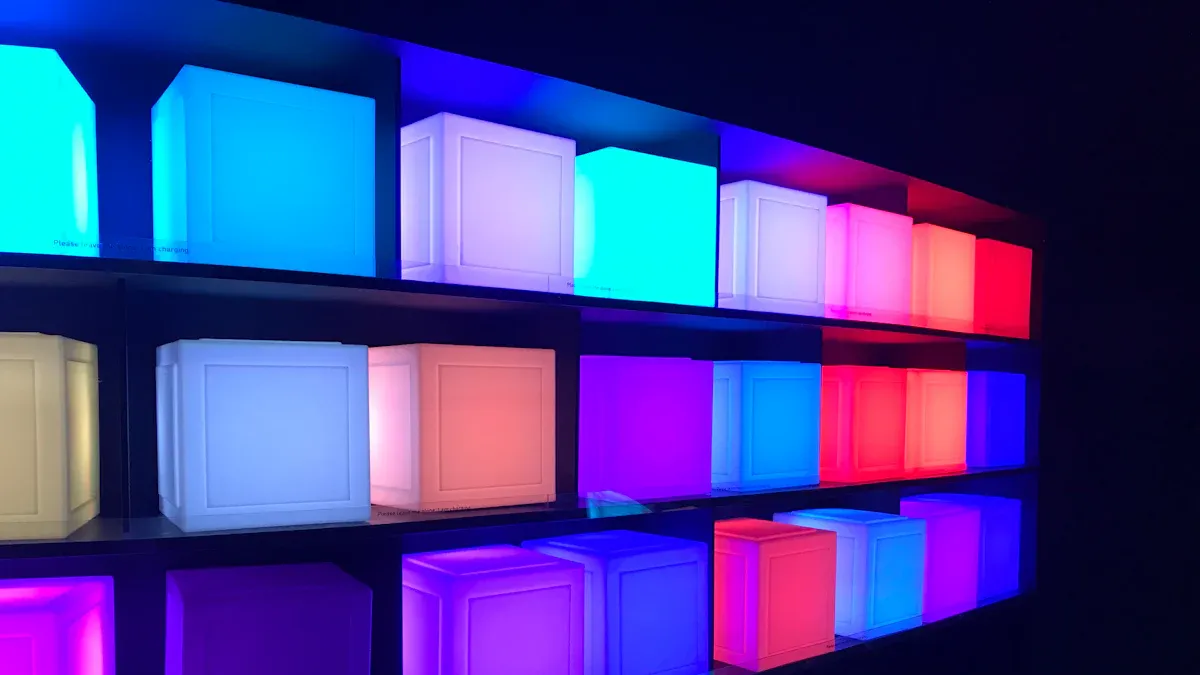
There are different kinds of acrylic light boxes. Each kind has its own use. The main types are edge-lit, backlit, single-sided, and double-sided. Knowing the differences helps you pick the right one.
Edge-Lit vs. Backlit
You can pick edge-lit or backlit light boxes. Your choice depends on how you want your display to look and how much power you want to use. Edge-lit light boxes have LED strips on the sides of the acrylic panel. Backlit light boxes put LEDs right behind the panel. This changes how bright the box is, how much energy it uses, and how much it costs.
Here is a table that shows the main features:
Feature | Edge-Lit Light Boxes | Backlit Light Boxes |
|---|---|---|
Light Output | Standard brightness, less uniformity | Higher brightness, more uniform illumination |
Energy Consumption | Slightly more power due to more LEDs needed | More efficient, uses less energy overall |
Design | Thinner, modern look | Requires more space for LEDs and diffuser |
You will also see changes in price and brightness:
Type | Cost Implication |
|---|---|
Backlit | Costs more because it needs more LED bulbs and uses more energy. |
Edge-lit | Costs less because it uses fewer LED strips. |
Feature | Edge-lit Lightboxes | Direct-backlit Lightboxes |
|---|---|---|
Brightness | Normal brightness | Brighter because of direct light |
Cabinet Depth | Less than one inch | Needs 2-4 inches for even light |
Uniformity of Diffusion | Not as even, can get dim in big sizes | More even light across the display |
Tip: If you want a thin and modern sign, choose edge-lit. If you want the brightest and most even light, pick backlit.
Single-Sided and Double-Sided
You can also pick single-sided or double-sided light boxes. Single-sided boxes show your message on one side. They are good for walls or places where people only see one side. These cost less and work for special uses. Double-sided boxes show graphics on both sides. You can use them in busy spots like store windows or hallways. People see your message from both ways, so more people notice it.
When you know about the types of light boxes, you can pick the best one for your space and needs. Each type gives you special benefits for your display.
Light Box Uses and Benefits
Common Applications
You can see an acrylic light box in lots of places. Businesses use them to make signs easy to notice. Restaurants and cafes show menus with bright letters. Event planners use light boxes at weddings and parties. They help make displays that catch your eye. You can use a light box at home too. Show your favorite photo or artwork. Some people display motivational quotes. Many artists use an artist light box or tracing light box. These tools help with drawing and design. They make tracing and sketching simpler. In stores, acrylic prints and light pads show off products. You see these displays inside and outside. Outdoor models are made to handle bad weather. They keep your message easy to see.
Common light box uses include:
Business signage for branding and menus
Event displays for parties and trade shows
Home decor with family photos or art
Artist light box for tracing and sketching
Retail displays using acrylic prints and light pads
Tip: You can change your acrylic light box to fit any space. Use it for art, ads, or home decor.
Advantages for Users
There are many good things about using a light box. Acrylic light boxes let over 92% of light shine through. This makes your acrylic prints and graphics look bright. Acrylic is much stronger than glass. Your display stays safe in busy places. The box is light, so you can move it easily. You can shape and change your light box for any project. LED lights use less energy than old bulbs. This saves you money and helps the planet. New light boxes use materials you can recycle. This makes them better for the environment. Outdoor models keep their color and shape for years. They work well even in tough weather.
Key benefits include:
High visibility and clarity for your displays
Energy efficiency with LED lighting
Durability and impact resistance
Versatility for indoor and outdoor use
Easy customization for any need
If you want to show art, set a mood, or highlight a product, an acrylic light box helps you do it. The benefits of using a light box make it a smart choice for artists, businesses, and anyone who wants their message to stand out.
Choosing the Right Acrylic Light Box
Factors to Consider
You want your acrylic light box to fit your needs and space. Start by thinking about where you will use it. Size matters. Large signs work well in busy places, while small panels fit personal spaces or highlight a single photo. Brightness is also important. Indoor light boxes need between 1,200 and 4,000 nits. Outdoor models need 5,000 to 7,000 nits for clear visibility. Uniform illumination helps your display stand out. High-transmission acrylic makes your graphics look sharp and bright. Choose materials like acrylic or polycarbonate for strength and weather resistance. These materials last longer and need less care.
Here is a table to help you compare key factors:
Factor | Description |
|---|---|
Size | Larger signs suit busy areas; smaller panels fit personal or focused displays. |
Brightness | Higher brightness boosts visibility, especially in dim spaces. |
Material | Acrylic and polycarbonate are tough, weather-resistant, and easy to maintain. |
Design | Foldable or portable designs make setup and transport simple. |
Tip: Uniform lighting and durable LED lights help your sign last longer and save energy.
Selection Tips
You can make a smart choice by following these steps:
Measure your space and decide what you want to display.
Pick the right thickness for your acrylic panel. Thicker panels add strength but may weigh more.
Choose a color that matches your setting.
Look for extra features like UV protection, hinges, or locks for added safety.
Check for certifications such as ISO 9001 for quality and ISO 14001 for environmental care.
Make sure your light box can handle weather if you plan to use it outside.
Test the evenness of the light. Uneven lighting can make your display hard to see.
If you plan to use a camera near your light box, keep it separate to avoid shake or interference.
Note: A well-chosen acrylic light box will make your display, artwork, or photo look its best and last for years.
Acrylic light boxes make displays look bright and even. They work well in busy places. These boxes are strong and look nice. They also save energy. You can use them for ads, art, or photos. Here are some things to remember:
They are light and simple to set up.
They look clear and let most light through.
You can change the design or size to fit your needs.
If you want to learn more, check these helpful links:
Resource Type | Link |
|---|---|
FAQ
How do you clean an acrylic light box?
You can use a soft cloth and mild soap. Avoid harsh cleaners. Wipe gently to keep the acrylic clear. Dry with a clean towel to prevent streaks.
Can you use an acrylic light box outdoors?
You can use many acrylic light boxes outside. Look for weather-resistant models. These boxes handle rain, sun, and wind. Check for UV protection to keep colors bright.
What graphics work best in a light box?
You get the best results with high-resolution prints. Use translucent film or backlit paper. These materials let light shine through and make colors pop.
How long do LED lights last in a light box?
LED lights can last up to 100,000 hours. You save money because you do not need to replace them often. LEDs also use less energy than old bulbs.
Can you change the image in an acrylic light box?
You can swap images easily. Many boxes use snap frames or SEG systems. These let you update graphics without tools. You keep your display fresh and current.
See Also
Capturing Stunning Images with Acrylic Light Boxes
Creating Perfect Light Boxes for Acrylic Art Displays
Exploring Types and Uses of Acrylic LED Light Boxes
Understanding Acrylic Light Boxes: Uses and Selection Advice
