LED lightbox picks that make exhibits shine bright

You can pick from the best LED lightbox choices made for museums and exhibits. These models have fun features and lights that turn on with sensors. They give cool experiences. LED lightboxes catch people’s eyes with bright screens and moving parts. Visitors stop and look around. In a museum, colors look better and artifacts stay safe. In an exhibit, you see exciting stories and more people join in. New technology mixes great looks with useful things. It helps you make displays people remember.
Key Takeaways
LED lightboxes make museum displays look better. They give bright and even light. This helps people see true colors and small details.
Using LED lightboxes uses less energy and saves money. This makes them a good choice for the environment in galleries and exhibits.
LED lightboxes keep artifacts safe from harm. They do not give off much heat or UV rays. This helps collections last longer.
You can change LED lightboxes to fit different exhibit styles and needs. This makes displays more interesting for visitors.
Buying good LED lightboxes makes visits better for people. This can help bring more visitors and increase sales.
Why LED Lightbox Lighting Matters
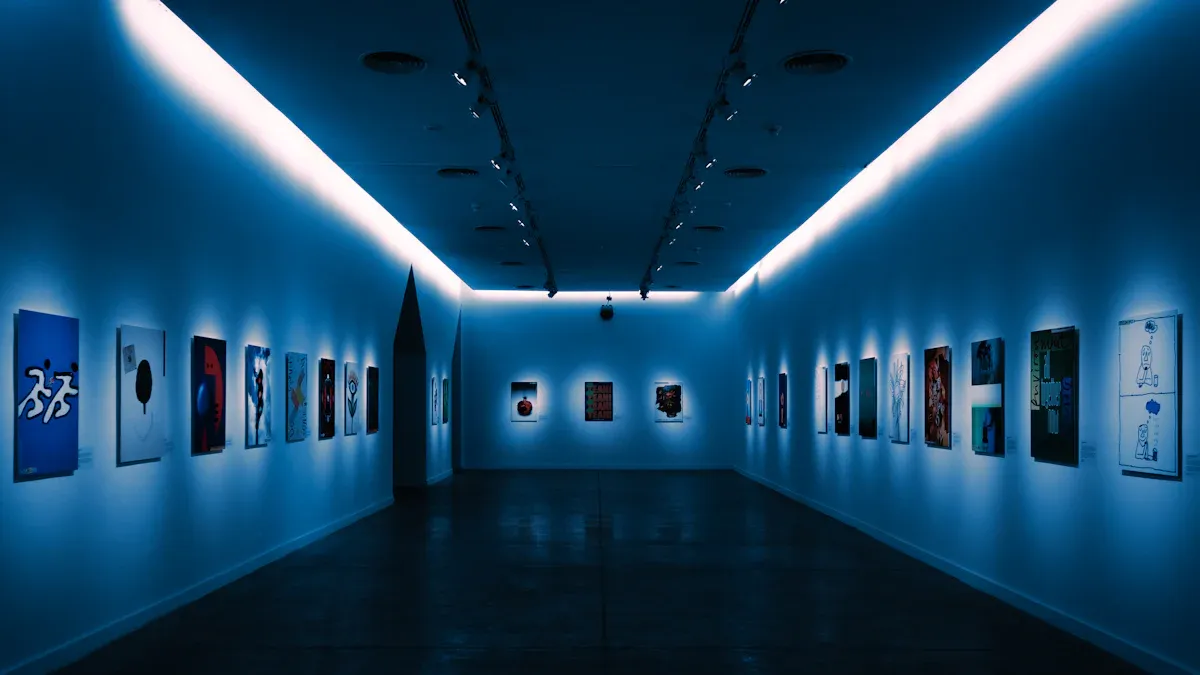
Enhancing Museum Lighting
Museum lighting should show every detail and color clearly. LED lightboxes give a wide range of light. This helps you see real colors in each display. You can change the color temperature to fit each artifact or artwork. LED lightboxes have a high Color Rendering Index (CRI). This means colors look bright and true.
Here is how LED lightboxes help with color accuracy in museum lighting:
Evidence Type | Description |
|---|---|
Spectrum of Light | LED lighting gives a wide range of light, so colors look better. |
Color Temperature | You can change the color temperature (2000 to 5000 K) for each display. |
Color Rendering Index (CRI) | High CRI means colors look real and bright. |
LED museum lighting also keeps artifacts safe. Old bulbs make UV rays and heat. These can hurt objects and make them fade. LED lightboxes do not make much UV or infrared heat. This protects your artifacts from light damage. You help keep your collection safe for a long time.
Here is a comparison of LED lightbox lighting and older lighting:
Lighting Type | UV Radiation Emission | Infrared Heat Emission | Impact on Artifacts |
|---|---|---|---|
LED Lightbox Lighting | Almost none | Very little | Safe lighting that does not harm art |
Traditional Lighting | A lot | A lot | Can damage sensitive materials |
LED museum lighting makes visits better. People see bright, clear displays. They enjoy the gallery and learn more. LED lightboxes use less energy. This saves money and helps the planet.
Benefits for Art Gallery Lighting
Art gallery lighting needs to show every brushstroke and color. LED lightboxes give bright, even light. You can pick edge-lit or backlit designs for your space. Edge-lit boxes are thin and fit in small spots. Backlit boxes are good for big displays and signs.
LED lightboxes use less power than old bulbs. The Department of Energy says switching to LEDs saves a lot of electricity. This makes your gallery greener. You waste less energy and make less pollution. LED lightboxes last longer, so you do not need to change them often.
LED gallery lighting works better too. The light spreads out evenly. You do not see dark spots or glare. This helps visitors enjoy the art more. You protect your art from light damage and keep your gallery looking great.
Tip: Use LED lightboxes to lower light exposure and light damage in your gallery. You will keep your collection safe and make visits special.
LED Lightbox Selection Criteria
When you pick an LED lightbox for your museum or gallery, you want it to be the best. Good lighting makes displays look great and keeps art safe. Here are the top things to think about when choosing lighting for any gallery or exhibit.
Brightness and Color Accuracy
You need lights that show real colors and make your gallery look nice. Pick a lightbox with a high Color Rendering Index (CRI), at least 90, so colors look true. For indoor galleries, the light should be between 1,500 and 3,000 nits. This brightness helps you see every detail. It is important that the color and brightness stay the same across the whole display.
Specification | Details |
|---|---|
CRI | ≥90 for true color |
Luminance | 1,500–3,000 nits (indoor) |
Color Consistency | ΔE < 3 for uniform lighting |
Energy Efficiency and Longevity
LED lights use less energy than old bulbs. This saves money and helps the earth. Good LED lightboxes can last over 50,000 hours. Some last up to 100,000 hours. You do not have to change them often. Using less energy also means less heat, which keeps art safe.
LED lightboxes can last as long as 100,000 hours.
They use much less energy than incandescent or fluorescent lights.
You get more light for your gallery with less waste.
Durability and Maintenance
You want lights that can handle busy days in a gallery. Pick lightboxes with aluminum frames and good cooling. This keeps them safe and cool. Look for IP65 or higher ratings to keep out dust and water. Good lighting design means easy-to-clean surfaces and strong parts.
Feature | Professional Standard |
|---|---|
Frame | Aluminum, not plastic |
Thermal Design | Passive heatsinks, sensors |
IP Rating | IP65 or higher |
Lumen Maintenance | L90 @ 15,000 hours |
Customization and Portability
Every gallery is different. You can find lightboxes in many shapes and sizes. Some are easy to set up and do not need tools. You can change graphics or connect more units for bigger displays. Light frames and quick setup help you change your lighting for each new show.
Easy to move for temporary gallery exhibits.
Custom choices for frame depth, brightness, and mounting.
Reusable designs let you update your gallery lighting often.
Tip: Always pick lighting that fits your gallery’s needs. The right lightbox keeps your gallery safe, green, and beautiful.
Top LED Lightbox Picks for Exhibitions
Premium LED Lightbox
If you want your museum displays to look their best, pick a premium LED lightbox. This lighting uses much less energy than old bulbs, so you save money and help the earth. The light is bright and even, so every detail is easy to see. You can choose from many sizes, colors, and frame styles to match your exhibit. Safety is important in museums. Premium models are UL certified and follow strict rules for setup. You can put them up in different ways, so they fit any space.
Feature | Description |
|---|---|
Energy Efficiency | Consumes up to 80% less energy than traditional lighting, leading to significant cost savings. |
Brightness and Uniformity | Provides bright and even illumination, enhancing visibility of graphics and messaging. |
Customization Options | Available in various sizes, color temperatures, and frame colors for aesthetic appeal. |
Safety | UL certified and designed for safe use with proper installation guidelines. |
Versatile Mounting Options | Facilitates easy installation and integration into diverse display setups. |
Tip: Use a premium LED lightbox when you need the highest quality lighting for rare artifacts or high-profile museum exhibitions.
Best Value LED Lightbox
If you want good lighting but do not want to spend a lot, try the best value LED lightbox. This choice gives you strong light and saves you money. Many museums and galleries use these for everyday exhibits. The light is bright and clear, so your displays stand out. These lightboxes can help bring in more visitors and boost sales. For example, one company got 25% more sales after using a lightbox. Another group saw 30% more visitors at their show with a custom lightbox.
Your displays get more attention from visitors.
You save money on power and repairs.
You get more people interested and buying tickets.
This is a good pick for museums with lots of changing exhibits or for galleries that need to save money.
Versatile LED Lightbox
If you need lighting that works for many types of exhibits, pick a versatile LED lightbox. It is good for both small and big displays. The strong aluminum frame makes it last longer and gives more support. You can use these with modular systems, so you can change your setup easily. You can pick single-sided or double-sided designs for more choices.
Benefit | Description |
|---|---|
Improved light uniformity | Offers better light distribution than 40mm models |
Stronger aluminum structure | Provides enhanced durability and support |
Compatibility with modular systems | Allows for versatile configurations and setups |
Supports single-sided or double-sided designs | Increases display options for various needs |
Note: Choose a versatile LED lightbox if you often update your museum exhibitions or need to move displays between galleries.
Eco-Friendly LED Lightbox
If you care about the planet, an eco-friendly LED lightbox is a smart choice. These use less energy, so you burn fewer fossil fuels and make less CO₂. The LEDs last much longer than old bulbs, so you throw away less waste. They do not get very hot, so you save on cooling costs in your museum. These lightboxes use safe materials, so you do not have to worry about mercury or other bad stuff.
Feature | Description |
|---|---|
Energy Efficiency | Lower energy consumption leads to reduced fossil fuel use and decreased CO₂ emissions. |
Long Lifespan | LEDs last up to 25 times longer than traditional bulbs, resulting in less waste from bulb changes. |
Lower Heat Emissions | LEDs emit minimal heat, reducing cooling energy needs in climate-controlled environments. |
Non-Toxic Materials | Free from hazardous substances like mercury, making disposal safer and minimizing environmental risks. |
Tip: Pick an eco-friendly LED lightbox for museum exhibitions that focus on sustainability or when you want to lower your building’s energy use.
Customizable LED Lightbox
If you want your exhibit to be special and match your museum’s style, try a customizable LED lightbox. You can pick the size, shape, color, and lighting effects. Some models can change color or brightness when people walk by, which makes your exhibit more fun. These lightboxes help visitors find their way in big museums. They also make your exhibit look creative.
Customizable LED lightboxes are great for special shows, themed events, or when you need signs that look cool. You can change the graphics and lighting for each new show. This gives you lots of ways to make your museum lighting unique.
Note: Use a customizable LED lightbox when you want to create a memorable experience or guide visitors through your museum exhibitions.
LED Lightbox Comparison Table
When you pick an LED lightbox, you want to compare choices. Looking at features helps you find the best one for your museum or gallery. You can check brightness, energy use, ways to customize, and how clear the display looks from far away or up close.
Here is a table that shows how top LED lightboxes are different:
Feature | Premium LED Lightbox | Best Value LED Lightbox | Versatile LED Lightbox | Eco-Friendly LED Lightbox | Customizable LED Lightbox |
|---|---|---|---|---|---|
Brightness | High, adjustable | Moderate, reliable | Flexible, multi-use | Efficient, moderate | Programmable, variable |
Energy Efficiency | Very high | High | High | Maximum | High |
Customization Options | Many choices | Basic options | Modular, flexible | Limited | Full customization |
Lifespan (hours) | Up to 100,000 | 50,000+ | 70,000+ | 100,000+ | 80,000+ |
Frame Material | Aluminum | Aluminum/plastic | Strong aluminum | Recycled aluminum | Aluminum/custom |
Mounting | Wall, freestanding | Wall, tabletop | Modular, portable | Wall, freestanding | Wall, hanging, custom |
You should also think about how sharp the images look. Pixel pitch and pixel density change how clear your display is. If the pixel pitch is smaller, you can stand close and see tiny details.
Pixel Pitch | Pixels per m² | Optimal Viewing Distance | Clarity Level |
|---|---|---|---|
P3.0 | ~111,111 | ≥3 m | Visible grain |
P2.5 | ~160,000 | ≥2.5 m | Better detail |
P2.0 | ~250,000 | ≥2 m | Sharper visuals |
P1.875 | ~284,444 | ≥1.8 m | Approaching HDTV clarity |
P1.579 | ~401,408 | ≥1.6 m | Ultra-fine detail |
P1.25 | ~640,000 | ≥1 m | Extreme detail |
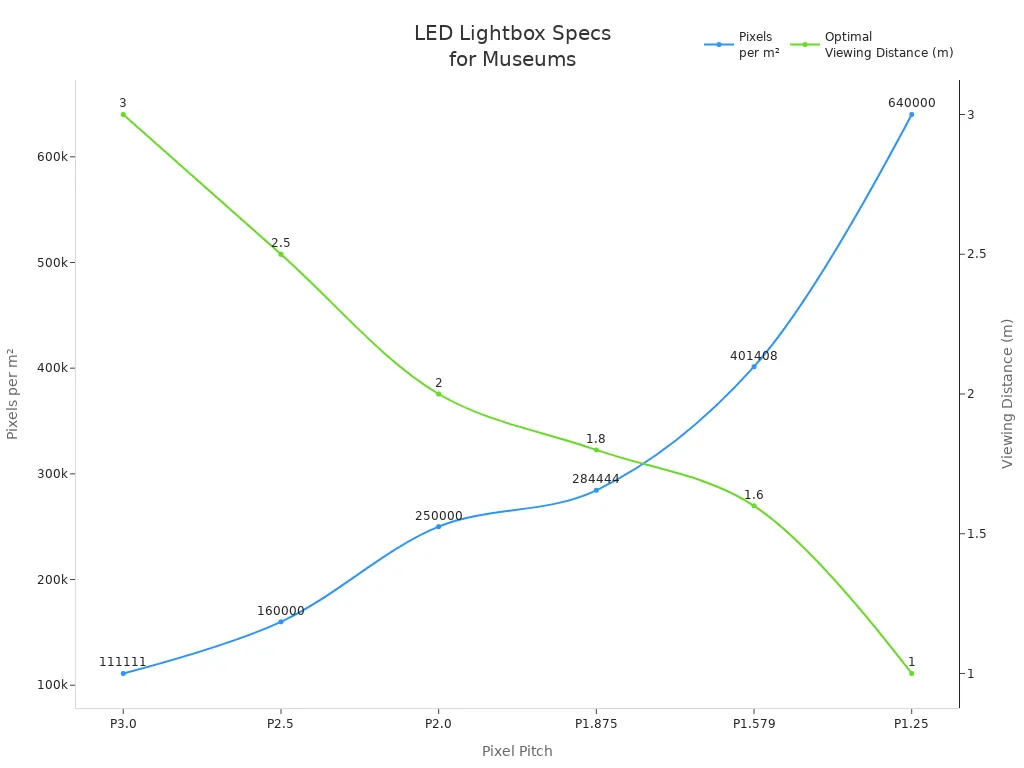
Tip: If you want very clear images up close, pick a lightbox with a smaller pixel pitch. For bigger rooms, a larger pixel pitch is fine.
Each lightbox has something special. Premium models are very bright and last a long time. Eco-friendly ones save energy and help the earth. Customizable lightboxes let you make cool displays. Use these tables to help you choose the best features for your needs.
Choosing the Right LED Lightbox
Matching Lighting to Exhibit Needs
You want your museum to stand out. The right lighting helps you show every detail and color in your exhibits. Each exhibit has different needs. Some displays need bright, even lighting. Others need soft, focused light. You can match the type of lightbox to your exhibit for the best results.
Here is a table to help you choose:
Model Type | Recommended Use | Key Features |
|---|---|---|
Backlit Displays | Trade Shows | Eye-catching, creates ambiance, effective signage |
Luminous LED Lightbox Signs | Retail POP Displays | Quick change graphics, thin profile |
Backlit Fabric Displays | Art Galleries, Trade Shows | Elegant printed graphics, captivating displays |
When you select a lightbox, look for features that give you even brightness and vibrant colors. You want a design that is easy to set up and take down. Strong materials help your lighting last longer. If you move your exhibits, pick a lightbox that is easy to carry. Compact and lightweight designs make transport simple. Modular systems let you change your setup to fit any space.
Budget and Space Planning
You need to plan your budget and space before you buy lighting for your museum. Modular design helps you save money. You can use the same frame for different exhibits. This means you do not have to buy new lighting each time. Rental options give you flexibility. You can try different lighting styles without spending too much. Overhead signs help you use your space well. They save money on rigging and keep your museum looking open.
Modular design saves money and fits many exhibit sizes.
Rental options lower costs and give you more choices.
Overhead signs use space well and cut rigging costs.
Tip: Always measure your space before you choose lighting. This helps you avoid mistakes and keeps your museum safe.
Installation Tips
You want your lighting to look perfect in your museum. Good installation keeps your displays safe and beautiful. Here are some tips:
Wear cotton gloves to keep fingerprints off your lightbox.
Work slowly so you do not wrinkle your graphics.
Do not overstretch your graphic. This keeps it smooth and free from creases.
You can make your museum shine with the right lighting and careful setup. Take your time and follow these steps for the best results.
Real-World Museum Lighting Success
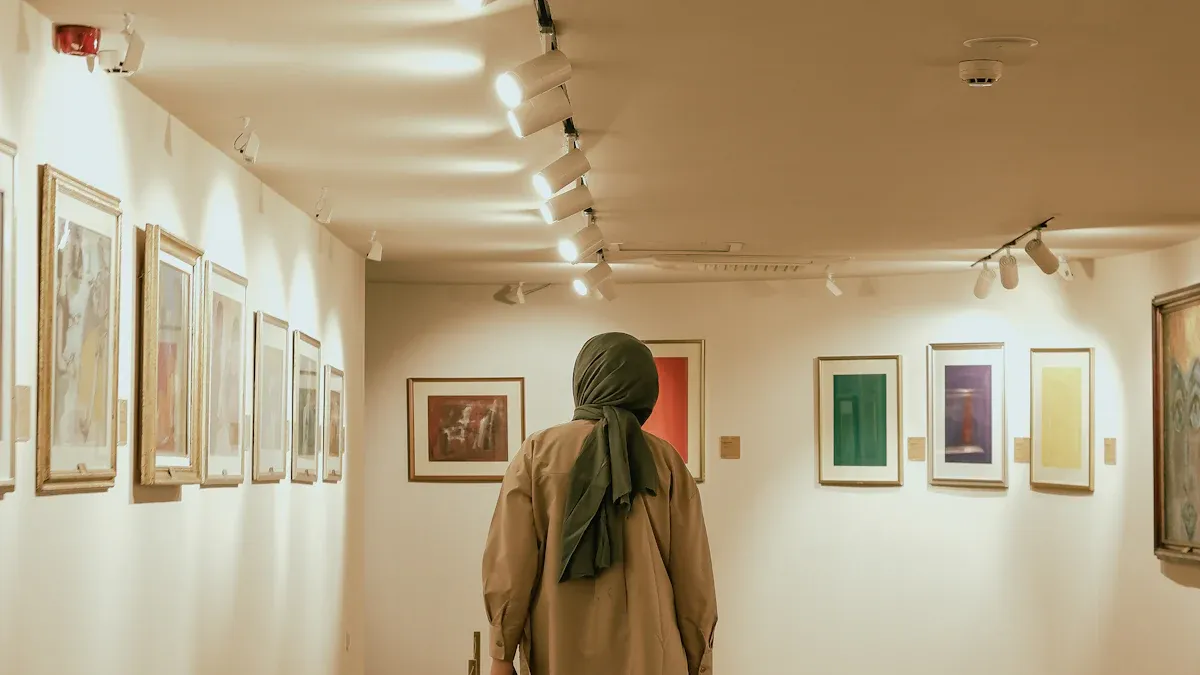
Museum Case Example
LED lighting can change how people feel in a museum. In 2014, Philips worked with Rijksmuseum Boerhaave to try a new Positioning System. This system used LED lighting to give visitors information based on their location. As you walked through the museum, displays would light up when you got close. This made your visit feel special and more fun.
The Seattle Art Museum also made its galleries better with new lighting. The team put in LED strips that look like real sunlight. This lighting keeps art safe and uses less power. You can see every detail in the art without worrying about heat or UV rays hurting it.
Here is a real example of how LED lightboxes helped a museum:
Feature | Description |
|---|---|
Installation Name | A Tour of the Imperial Garden |
Technology Used | LED light boxes |
Key Enhancement | Shows how night and day change |
Visitor Interaction | Lets visitors see flowers up close and zoom in on them |
You can use this kind of lighting to make cool effects in your museum. Visitors can watch day turn into night or zoom in to see small things. This makes the museum more interesting and helps people learn new things.
Exhibition Designer Testimonial
Exhibition designers pick LED lighting for many reasons:
You save money because LED lightboxes do not cost much more than regular ones.
They are easy to use and move. Many lightboxes are light and can be changed fast.
You help the earth. LED lighting uses less energy, which is better for nature.
You keep your museum safe. LEDs do not get hot and do not have dangerous stuff like mercury.
You can count on LED lighting to make your museum displays look great. This technology gives you more choices, keeps things safe, and makes visits better for everyone.
You can help your museum or exhibit look special with good lighting. The best LED lightbox choices give you lots of good things for your displays. Look at the table below:
Benefit | Description |
|---|---|
Energy Efficiency | LED lightboxes use less power than old lights. |
Brightness and Visibility | They spread light evenly, so displays are easy to see. |
Versatility and Customization | You can get them in many sizes and styles for different exhibits. |
Durability and Maintenance | LED lightboxes last a long time and do not need much care. |
Quick Display Changes | You can change pictures fast to keep exhibits new and fun. |
When you pick lighting, think about what you want and what your space needs. Good LED lighting helps you save energy and money. It also lets you make fun and interactive displays. You help the planet and make your lighting look better. Try new lighting ideas to make your next exhibit stand out.
Buying good LED lightboxes makes your displays look better and helps the earth.
They save energy, so you spend less money and help with green goals.
New LED lightboxes let you change and interact with displays, making visits more fun.
FAQ
What makes LED lightboxes better for exhibits?
LED lightboxes give you bright, even light. You see true colors and details. They use less energy and keep artifacts safe from heat and UV rays.
How long do LED lightboxes last?
Most LED lightboxes work for over 50,000 hours. Some models last up to 100,000 hours. You change them less often and save money.
Can you customize LED lightboxes for your exhibit?
You can pick the size, shape, and color. Many models let you change graphics or adjust brightness. Custom options help you match your exhibit style.
Are LED lightboxes safe for art and artifacts?
LED lightboxes do not make much heat or UV light. You protect your art and artifacts from damage. Museums use them to keep collections safe.
See Also
Creating Stunning Acrylic Light Box Displays That Captivate
Top 10 Acrylic Light Boxes for Beautiful Photo Displays
Understanding LED Light Box Displays and Their Uses
