Why Luminance Is the Key to Effective Outdoor Digital Signage Screens

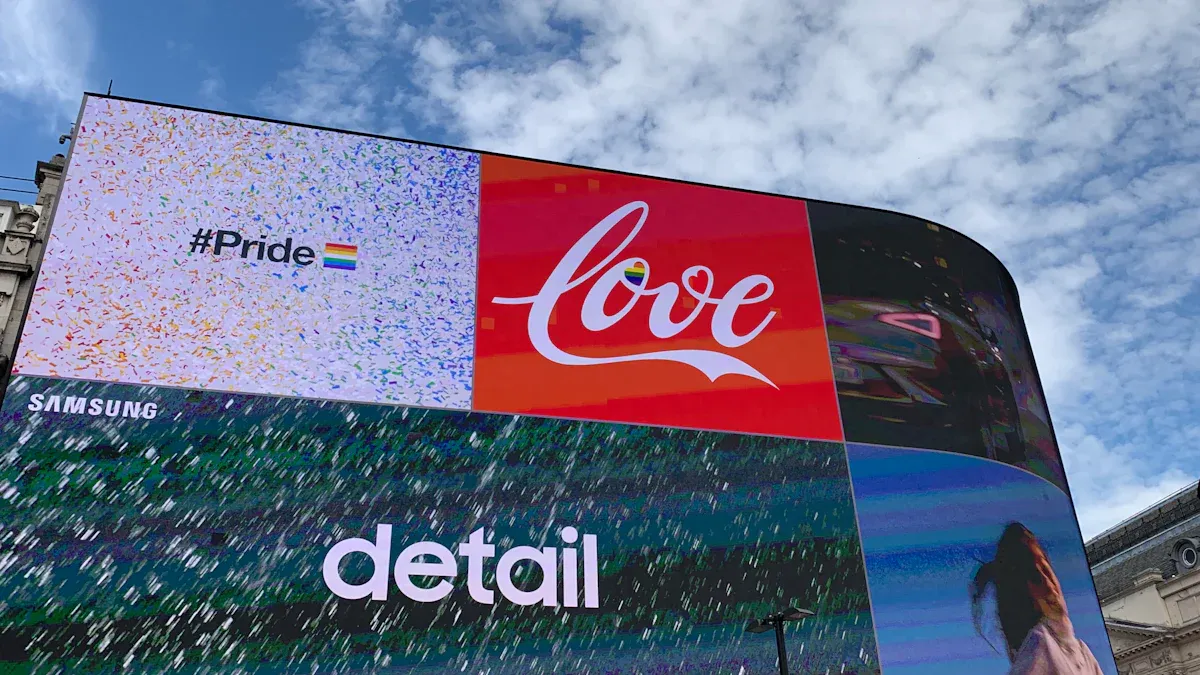
Luminance affects how well you can see a screen outside in sunlight. Luminance is how much light a screen gives off. Many outdoor screens are not bright enough. About 80% of outdoor digital signage screens are too dim to see well. You need screens to be much brighter outside than inside.
Environment | |
|---|---|
Indoor | 300-700 |
Outdoor | 2500-5000 |
If you want people to notice your message, check the luminance before picking your screen.
Key Takeaways
Luminance is very important for outdoor screens. Pick screens with at least 2,000 nits so people can see them in sunlight.
High brightness makes it easier to read and see pictures. It helps your message stay clear and colors look bright, even when it is sunny.
Anti-reflective coatings help people see the screen better. Choose screens with these coatings to cut down glare and make things clearer.
More brightness means more people will pay attention. Screens with 2,500 nits or more can make user interaction go up by as much as 80%.
Think about where you will put the screens. Different places need different brightness levels so your message is easy to see.
Luminance Basics for Outdoor Digital Signage
What Is Luminance
Luminance is the amount of light a screen gives off or reflects. You measure luminance in nits, which means candelas per square meter. When you look at a digital display outside, luminance decides how well you see the content. If you want your outdoor digital signage to stand out, you need to understand luminance. It helps your message stay clear in different lighting conditions.
Tip: Luminance is not just about making a screen look bright. It is about making sure people can read and see your message, even when the sun shines directly on the screen.
Measuring Brightness in Nits
You measure screen brightness in nits. Nits tell you how much light the screen sends out. The higher the number, the brighter the screen. Outdoor digital signage needs much more screen brightness than indoor screens. You can see the difference in the table below:
Lighting Condition | Recommended Nit Levels |
|---|---|
Indoor | 200–500 nits |
Semi-Outdoor | 500–1,000 nits |
Full Outdoor | 1,500+ nits |
During the day, outdoor screens often need between 6,000 and 8,000 nits. At night, you need less, usually between 2,000 and 2,500 nits.
Time of Day | Brightness (nits) | Footcandles (fc) |
|---|---|---|
Day | 6,000 - 8,000 | N/A |
Night | 2,000 - 2,500 | 0.3 |
If you choose a screen with low screen brightness, your message may disappear in sunlight. High screen brightness helps your digital display stay visible all day.
Why High Brightness Matters
High brightness is important for outdoor digital signage. You need it to fight against direct sunlight and glare. Here are some reasons why high screen brightness matters:
High-brightness screens keep your message clear and readable, even in bright sunlight.
These screens offer much higher screen brightness than regular indoor screens.
You get better image clarity and wider viewing angles with high-brightness screens.
High-brightness screens often reach thousands of nits, which is needed for outdoor use.
These screens attract attention and boost user engagement, even in tough lighting.
Outdoor digital signage needs screen brightness far above indoor levels to work well.
Some brands, like Samsung VXT, make digital displays with high brightness for outdoor use.
If you want your outdoor digital signage to succeed, you must pick a screen with enough screen brightness. This helps people see your message, no matter the weather or time of day.
High-Brightness Displays and Sunlight Visibility
Combating Reflections and Glare
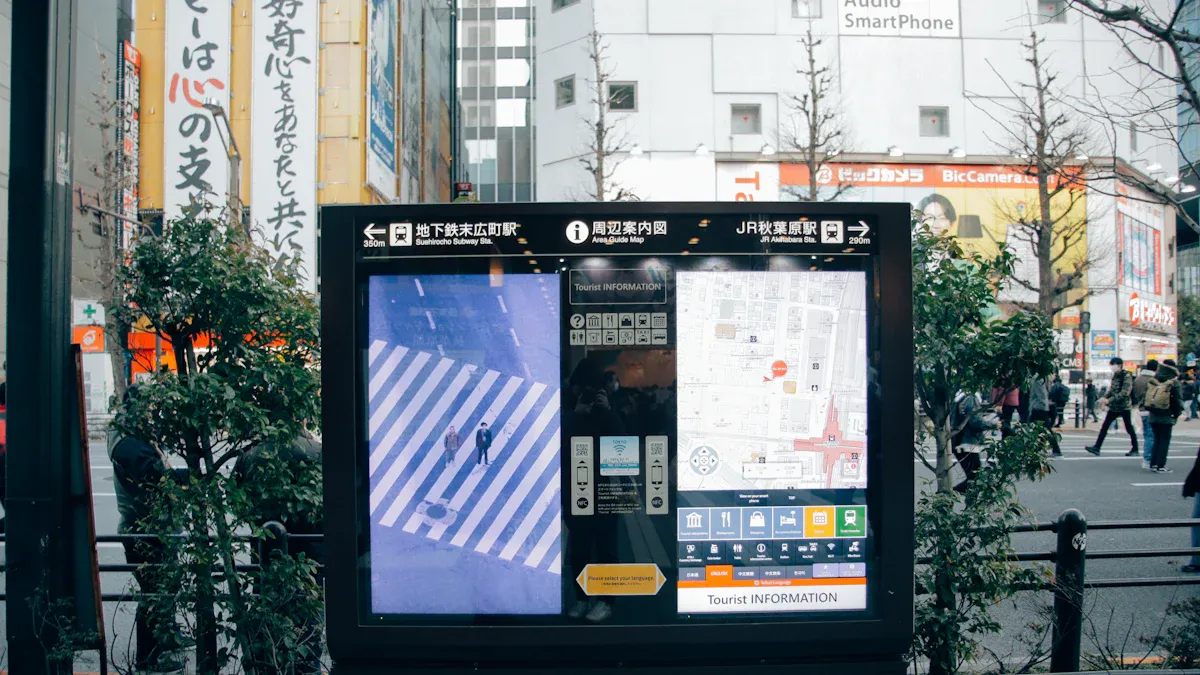
Putting a digital sign outside can be tricky. Sunlight and reflections make screens hard to see. A high brightness screen helps with these problems. You need more than just a bright screen. Special coatings and technology help lower glare and reflections.
Manufacturers use two main coatings to help you see the screen:
Technology Type | Reflection Output | Advantages | Disadvantages |
|---|---|---|---|
~8% | Cheaper, lowers glare a bit | Hard to see from some angles | |
Anti-Reflective | ~0.4% | Clearest in bright places, little glare | Costs more than anti-glare |
Anti-glare coatings spread out light. This lowers the shine on your screen. It makes the screen easier to read. Sometimes you might see a little haze. Anti-reflective coatings work even better. They cut down the light bouncing off the screen. You get a clearer picture, even when the sun is bright. For the best results, pick a high brightness screen with anti-reflective technology.
Note: Anti-reflective coatings cost more, but they give you the clearest view for outdoor digital signs.
Maintaining Clarity in Direct Sunlight
Direct sunlight can make most screens look faded. A high brightness screen fixes this with strong backlights and special layers. You need at least 1,500 nits for outdoor screens. In very sunny places, you may need 3,500 to 6,000 nits or more.
Condition | Recommended Luminance (nits) |
|---|---|
Direct sunlight / exposed outdoor signage | 1,500–5,000 |
Target for many outdoor signage solutions | 2,000–5,000 |
Extreme direct sunlight with high reflections | 3,500–6,000 |
A high brightness screen uses many features to keep things clear:
Brightness over 1,000 nits, but some outdoor screens reach 3,000 to 10,000 nits.
Better anti-reflective screens that lower glare.
Stronger backlights for easier viewing.
Optical bonding removes the air gap between glass and display. This stops light from bouncing inside and makes things clearer.
You will see a big difference between regular screens and high brightness screens. The table below shows how they compare:
Feature | Standard LCDs | Sunlight Readable Displays |
|---|---|---|
Brightness | 300 nits | 1,000+ nits |
Contrast in Bright Light | Lower | Stays strong with AR tech |
Optical Bonding | No | Yes |
A high brightness screen keeps the contrast ratio high, even in sunlight. Contrast ratio means the difference between the darkest and brightest parts of the image. High contrast ratio makes your content look sharp and easy to read. Optical bonding and anti-reflective coatings work together to keep the image clear.
If you want your outdoor digital sign to stand out, pick a high brightness screen. This screen keeps your message easy to see, even on sunny days. You will get better colors, sharper pictures, and higher contrast. Your audience will always see your message, no matter the weather.
Practical Benefits of High Brightness
Readability and Picture Quality
You want everyone to see your message outside. High brightness makes this happen. It keeps the screen easy to read, even in sunlight. Text and pictures stay sharp and clear. High brightness stops your content from looking faded. Your image quality stays strong in any light.
Your images and words stay clear and bright.
You get better picture quality, which matters for outdoor screens.
Tip: A high brightness screen keeps your message easy to see and your pictures looking good, no matter the weather.
Accurate Colors Outdoors
You need true colors for your outdoor digital signage to look good. High brightness helps your screen show real colors, even in hard lighting. When your display is bright enough, colors stay bold and clear. This keeps your picture quality the same all the time. If your screen is too dim, colors can look faded. You might also see changes in picture quality from one screen to another. Outdoor screens often need between 4,000 and 8,000 nits to keep colors true and images easy to see.
High brightness makes sure your pictures stand out. You can trust your audience will see the right colors and clear images every time.
User Engagement
When people can see your message, they pay more attention. High brightness makes people interact more with your outdoor digital signage. Studies show screens with 2,500 nits or more are up to 80% easier to see. This means more people notice and engage with your content. Some screens reach up to 7,000 nits, so your message stays sharp and your pictures look good all day.
Brightness Level (nits) | Visibility Improvement (%) | User Engagement Impact |
|---|---|---|
2,500 and above | 80% | Increased interaction |
You can expect more people to know your brand and better results when your signs use high brightness. Your pictures stay clear, your message stands out, and your audience connects with your content.
Use Cases for Outdoor Digital Signage Screens
Retail and Commercial Areas
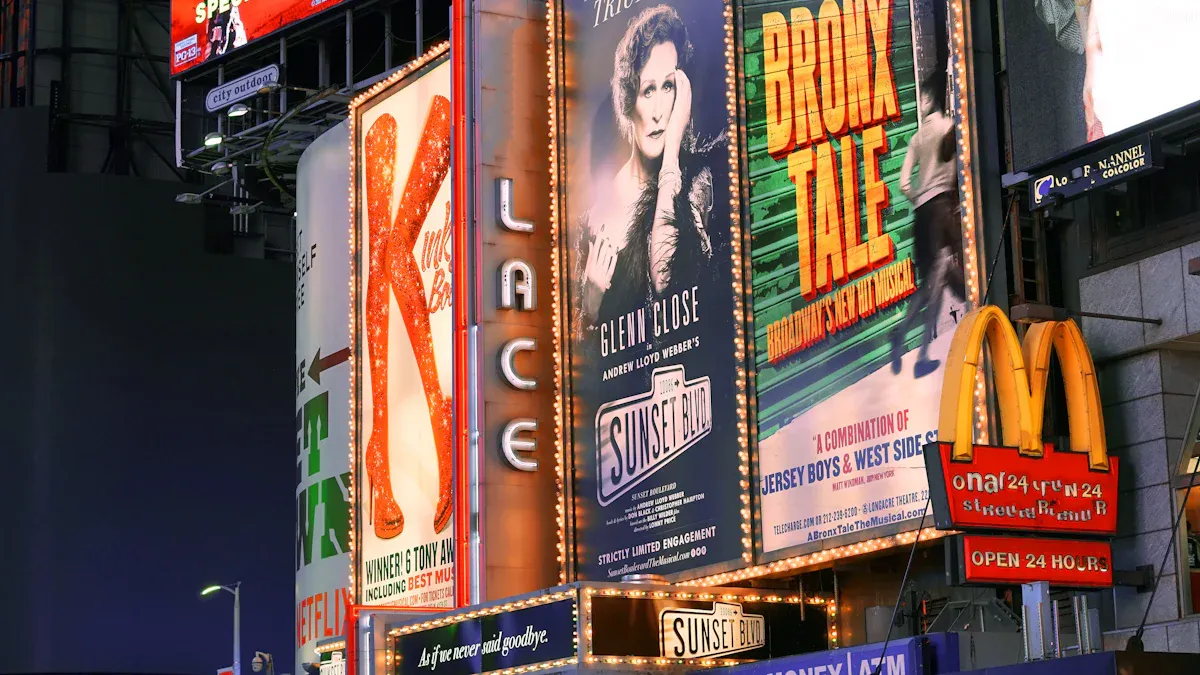
Outdoor digital signage screens are common in stores and businesses. Shopping malls use big screens to get people’s attention. They show sales and help people find their way. Restaurants use outdoor digital signage screens for menus outside. These screens stay easy to read, even when the sun is bright. Banks and hotels use digital signs to share important news and services. The screens keep words and pictures clear with strong contrast. Customers can quickly see menu items and deals. This helps them decide fast. Studies found stores sold 29.5% more after adding digital signs. Seven out of ten customers said digital signs helped them choose. High-brightness technology makes outdoor digital signage screens much brighter than regular screens. Your message stands out more.
Shopping malls: Bring in shoppers and help them find stores.
Restaurants: Show menus and deals outside.
Banks and hotels: Give updates and news.
Commercial plazas: Advertise sales and events.
Transportation and Public Spaces
Outdoor digital signage screens are important in places like airports and bus stations. These screens give updates and ads in real time. High-brightness screens stay clear, even in strong sunlight. Tough cases protect the screens from lots of people and daily use. Digital signs help control crowds and stop confusion when it gets busy. Travelers see updates about arrivals, departures, and alerts right away. Digital signs also make messages easy to read in any light.
Airports and bus stations: Show times and alerts.
Public squares: Help people and share news.
Smart city spots: Give directions and local info.
Events and Entertainment
Events and entertainment places use outdoor digital signage screens to keep people interested. You see these screens at concerts, sports games, and festivals. High-brightness screens make sure everyone can see what’s on them, even in sunlight or bad weather. The screens show bright colors and sharp pictures. You can put live videos, polls, and changing content on them. Digital signs make events more fun and can bring in 25% more people. Outdoor digital signage screens help you share news, show sponsors, and guide guests.
Bright screens grab people’s attention.
Interactive content makes crowds join in.
Content stays clear, no matter the weather.
Tip: Outdoor digital signage screens make stores, public places, and events better by helping people see and interact with messages.
You should pay attention to luminance for outdoor screens. High brightness helps your message stay clear in sunlight.
LED displays are easy to see outside, even when it is bright.
You can change the brightness to fit the light. This makes the screen easier to see and uses less power.
Screens with high luminance work longer and need less fixing.
Remember: Pick screens with at least 2,000 nits. This makes sure people can see your message anywhere.
FAQ
What does brightness mean for outdoor digital signage screens?
Brightness shows how much light your screen gives off. You need high brightness for outdoor screens. Sunlight makes screens hard to see. If you pick a screen with low brightness, your message may fade. High brightness helps your sign stand out.
How many nits of brightness do you need for outdoor screens?
You need at least 2,000 nits of brightness for outdoor use. Some places need 5,000 nits or more. Brightness levels change with sunlight. You should check the area before you choose your screen.
Tip: More brightness means better visibility in sunlight.
Why does brightness matter for color and image quality?
Brightness keeps colors bold and images sharp. You get high-quality contrast with strong brightness. Your screen shows effective image presentations. If brightness drops, colors fade and details blur. You want your message to stay clear all day.
Can you adjust brightness on outdoor digital signage screens?
You can change brightness on many outdoor screens. Some screens adjust brightness by themselves. This saves power and keeps your message easy to see. You should look for screens with automatic brightness control.
Feature | Benefit |
|---|---|
Adjustable brightness | Saves energy |
Auto brightness | Better visibility |
Does brightness affect how long your screen lasts?
High brightness can make screens work harder. You need screens built for outdoor use. Good screens handle high brightness and last longer. You should pick screens made for strong sunlight. This helps your sign work well for years.
See Also
Indoor And Outdoor LED Signage Displays: A Comparison Guide
Selecting The Perfect LED Display Sign For Your Company
Integrating Digital Solutions Into LED Display Signage
Configuring Digital Signage Monitors For Optimal Visual Impact
Upcoming Trends And Innovations In LED Digital Display Signage
