LED Light Boxes: Types, Applications, and Selection Tips

When you see bright and cool displays in stores or airports, you are probably looking at led light boxes. These are thin panels that use LED lights to light up pictures or graphics. Businesses pick them because they use less energy and look stylish.
In 2023, the worldwide market was $10.2 billion.
Experts think it will grow to $22.5 billion by 2032 with a 5.51% yearly growth rate.
Advancement Type | Description |
|---|---|
Energy Efficiency | Uses less electricity, so it costs less and helps the planet. |
Design Innovations | Has brighter lights, nicer colors, and more ways to change displays. |
Interactivity | Lets people control displays from far away for more fun. |
Sustainability | Uses materials that can be recycled, which is better for nature. |
Market Demand | Many stores and hotels like them for their looks and money savings. |
Future Technologies | Will soon have augmented reality and AI for new ways to show things. |
Key Takeaways
LED light boxes use less energy and look nice. They help businesses save money. They also help bring in more customers.
There are many types of LED light boxes. Some are back-lit, edge-lit, or fabric. Each type has a different use. Pick one that fits your display and space.
LED light boxes work for over 50,000 hours. This means you do not need to fix or change them often. They stay bright for a long time.
Think about how you will install LED light boxes. Check for safety features. Make sure they have certifications for safety and quality.
LED light boxes help people see displays better. They make stores, museums, and airports more interesting. They are good for ads and sharing information.
What Are LED Light Boxes?
Definition and Features
You can find led light boxes in lots of places. They are in malls and airports. These boxes use led lights to shine through pictures or photos. This makes the images look bright and easy to see. The boxes are thin and look modern. They catch people’s eyes.
Here is a table that shows how led light boxes and traditional fluorescent lightboxes are different:
Feature | LED Lightboxes | Traditional Fluorescent Lightboxes |
|---|---|---|
Energy Efficiency | Lower energy consumption | Higher energy consumption |
Durability | Solid-state construction, shock-resistant | More fragile, prone to breakage |
Visual Appeal | Uniform illumination, high CRI | Less uniform illumination |
Maintenance Needs | Low maintenance, consistent performance | May flicker or buzz over time |
Environmental Impact | Mercury-free, recyclable | Contains mercury, less eco-friendly |
Initial Investment | Higher upfront cost | Lower upfront cost |
Customization Options | Greater flexibility in design | Limited customization options |
Led light boxes are stronger and last longer. They make pictures look better and brighter. You can pick from more designs. You do not have to fix them as much.
Benefits of LED Technology
Led light boxes have many good points for displays. They use less power than old neon or fluorescent signs. Look at the chart below to see how much money you can save each year:
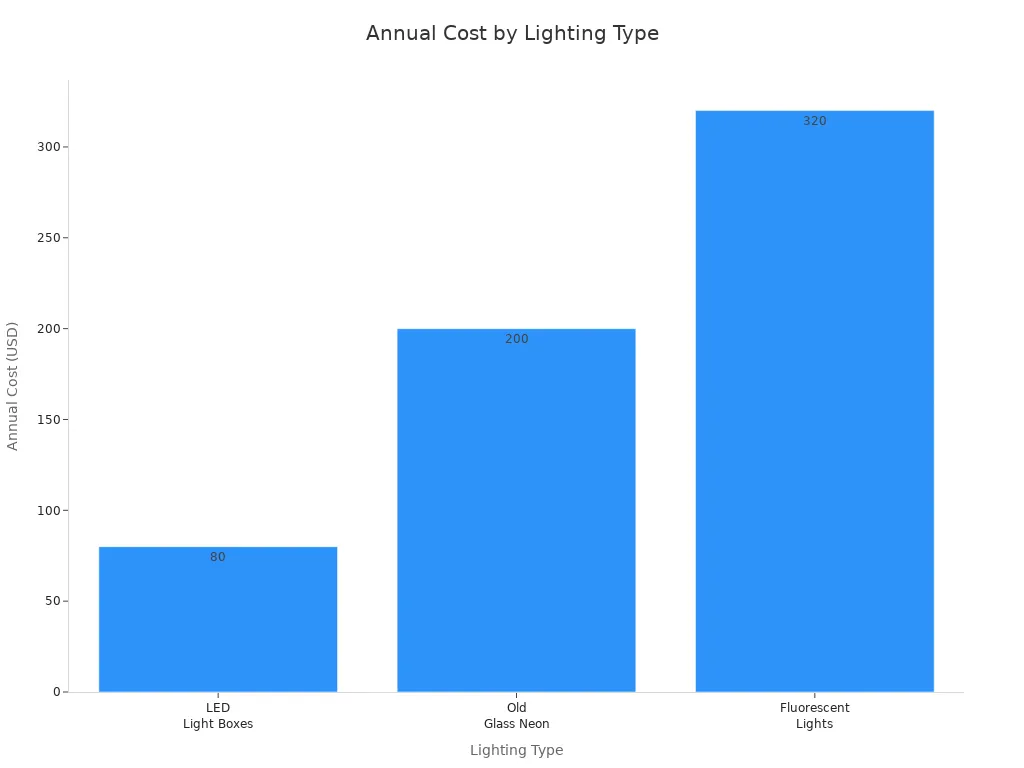
You pay less for electricity.
You do not need to change bulbs often.
The boxes do not get very hot, so you save on air conditioning.
LED lightboxes give the same brightness as old lights but use much less power.
Led light boxes are also better for the planet. They do not have mercury and you can recycle more parts. They last over 50,000 hours, so you do not need to change them a lot. Led light boxes help lower greenhouse gas emissions and have better energy ratings. Some new models even have smart controls, so they are easier to use.
If you want a display that saves money, looks nice, and helps the earth, led light boxes are a great pick.
Types of LED Light Boxes
There are three main types of led light boxes. Each type has a different build and way of lighting. Each one works best for certain uses. Knowing these differences helps you choose the right one.
Backlit LED Light Boxes
A back-lit light box has LED lights behind the picture. The lights shine forward and make the image bright. You see these in places like malls and airports. They are good for big pictures because the light spreads everywhere.
Here is a table that shows how back-lit and edge-lit light boxes are different:
Feature | Edge-Lit Light Boxes | Backlit Light Boxes |
|---|---|---|
Light Positioning | LED strips are inside the edges and shine sideways. | LED lights are on the back panel and face the graphic. |
Thickness | Very thin because lights are on the sides. | Needs more depth for the light to spread. |
Cost | Costs less because it uses fewer LED strips. | Needs more bulbs, so it can cost more. |
Light Distribution | Corners may glow; a grid helps spread light. | Light spreads evenly across the whole frame. |
Best Use | Good for small graphics and thin designs. | Best for big graphics that need even light. |
Back-lit light boxes give strong and even brightness. This makes them great for ads and store displays. Stores use them to show products and deals. The even light makes pictures look sharp.
Tip: Pick a back-lit light box if you want your sign to stand out in bright places.
Edge-Lit LED Light Boxes
An edge-lit light box has LED strips on the frame’s edges. The light moves sideways through a special panel. It lights up the picture from the sides. This makes the box thin and light.
Here is a table with more ways edge-lit and back-lit models are different:
Feature | Edge-Lit LED Light Boxes | Backlit LED Light Boxes |
|---|---|---|
LED Positioning | LEDs are on the edges of the panel. | LEDs are on the back of the panel. |
Light Dispersion | Light goes sideways and looks softer. | Light goes straight out and is brighter. |
Thickness | Thinner for sleek designs. | Thicker because of the back-lit style. |
Installation | Can go in grid ceilings or on walls. | Needs drop grid ceilings to install. |
Lifespan | Shorter life because of yellowing and heat. | Lasts longer because it stays cooler. |
Brightness | Not as bright, good for small spaces. | Brighter, good for bigger areas. |
Cost | Costs more to make and ship. | Usually costs less because it is simpler. |
Edge-lit light boxes are good if you want a slim look. They fit in small spaces or where you need a light display. You can put them on walls or ceilings easily. These work best for small pictures or menu boards.
Note: Edge-lit light boxes use fewer LEDs, so they save energy and cost less to run.
Fabric LED Light Boxes
Fabric LED light boxes use printed fabric stretched over a frame. LED lights behind the fabric make the picture glow. You see these at trade shows, exhibits, and big stores.
Here is a table that shows why fabric LED light boxes are special:
Feature | Benefit |
|---|---|
High-quality graphics | Bright visuals grab attention and show off brands. |
Elimination of shadows | The display is lit evenly so it is easy to see. |
Bright, uniform illumination | Makes displays stand out in many places. |
Seamless display with SEG graphics | Looks clean and frameless so the picture stands out. |
Versatile usage | Works in lots of places and shows messages even in dim light. |
Fabric LED light boxes are easy to update. You can change the fabric graphic fast for new events. Brands like Lintel Display make these with frames you can change and bright light. They are a top pick for companies that want big, bold displays.
Tip: Use fabric LED light boxes for big displays when you want to get noticed and look modern.
How to Choose Among the Types
Think about your space, budget, and what you need to show. If you want the brightest light for a big sign, pick a back-lit light box. If you want a thin display for a small spot, choose an edge-lit light box. For big graphics you can change often, go with a fabric LED light box.
People say led light boxes work well in many places. They like saving energy, bright light, and easy setup. You see them in stores, offices, airports, and museums. These led light boxes help brands stand out and make displays look professional.
Remember: Picking the right LED light box helps your brand and makes your message shine.
Applications of LED Light Boxes
Retail and Advertising Light Box
You can find led light boxes in lots of stores. These advertising light box displays help bring in more customers and increase sales. The bright lights and moving images grab people’s attention. People walking by may stop and come inside. You can use them in windows, on shelves, or at the checkout area. Here is a table that shows how these light tables help your store:
Benefit/Application | Description |
|---|---|
Attracting Attention | Movement and brightness catch the eye, turning passersby into foot traffic. |
Enhancing Brand Storytelling | Showcases brand stories and campaigns through immersive video and rich colors. |
Increasing Sales Conversion | Digital signage influences buying decisions, promoting upsells and special offers. |
Easy Content Management | Allows instant updates across multiple locations, enhancing marketing agility. |
Modernizing the Store Environment | Adds a high-tech look that appeals to tech-savvy shoppers, enhancing their shopping experience. |
Common Applications | Includes window displays, shelf-edge screens, overhead signage, interactive kiosks, and POS displays. |
Real-World Example | A fashion retailer saw a 28% increase in walk-in traffic and boosted product engagement. |
You can change what is on the screen very fast. This makes it easy to update your ads. Many brands use led light boxes for light box advertisement because they make stores look cool and new.
Museums and Exhibits
Museums use led light boxes to make displays stand out. You can see framed light boxes and light tables showing art, old objects, and facts. These application scenarios help people learn and have fun. Here are some examples from famous museums:
Museum Name | Description |
|---|---|
Colonial Williamsburg’s Abby Aldrich Rockefeller Folk Art Museum | Utilizes twelve 18″ x 77″ Premium LED Light Boxes to display contextual information about exhibits, including a collection of African American quilts. |
Museum of Human Evolution | Employs Rosco LitePads for backlighting graphic panels and illuminating artifacts since its opening in 2010. |
You can use light pads and light tables to show small details in cases. These common uses of led light boxes make museum trips more fun and interesting.
Airports and Digital Signage
Airports need signs that are easy to see and read. Led light boxes and framed light boxes help you find your way and get news fast. You see these light tables showing flight times, directions, and ads. Here is how they help in these places:
Function | Description |
|---|---|
Clear Information | LED light boxes provide simple and readable information for travelers navigating the airport. |
Flight Information Display | They display real-time flight information, helping passengers stay informed about their journeys. |
Advertising | Used for promoting airport services and advertisements, enhancing the overall passenger experience. |
You get help finding important places.
You see clear signs for directions.
You spend less time waiting and move faster.
These typical application scenarios show how led light boxes make travel and ads better in busy places.
Artistic and Photography Uses
Artists and photographers use led light boxes for their work. You can use light tables and light pads to look at negatives, trace pictures, or show art. Exhibition display setups often use these tools. Here is a table that explains the benefits for art and photography:
Feature | Benefit |
|---|---|
Backlit fabric displays | Makes displays look stylish and interesting. |
Radiant lighting | Makes graphics look better and more exciting. |
Bright, even lighting | Makes colors clear and artwork stand out. |
Eliminates hotspots | Gives a smooth look and better presentation. |
High-impact presence | Brings in visitors and makes displays memorable. |
Portable | Easy to move and set up for new shows. |
Quick graphic changes | Lets you change displays fast to keep things new. |
You can set up light tables and light pads for each show. These common uses of led light boxes help you make great art displays and professional presentations.
Tip: Try using framed light boxes and light tables in your next exhibition display to make your work shine.
LED Light Box Selection Tips
If you want to pick the best led light box, you need some help. This section gives you the most important things to think about. You will learn how to choose the right product for your needs. You will also learn how to save energy and pick the best way to install it. These tips help you avoid mistakes and get the most for your money.
Application and Purpose
First, think about how you will use the light box. Every use is different. You might need a sign for a mall, a display for photos, or an ad sign. Ask yourself these questions: What will you use the light box for? Is it for branding, giving information, or just for looks? Will you use it inside or outside?
Look at the light source choices. LED light boxes use less energy than fluorescent ones. Make sure the design gives even light and true colors. This is important for stores, art, and other uses.
Tip: Always pick a light box that fits your needs. This helps you avoid buying the wrong one.
Thickness and Profile
The thickness and shape of the light box change how it looks and how you put it up. Thin frames, like an 80mm-deep frameless aluminum frame, look modern and are easy to install. Some LED light boxes are less than an inch thick. You can put them on walls, hang them, or fit them in small spaces.
A frameless style makes the picture stand out more. People will look at the graphic, not the frame. Pick a shape that fits your space and use. If you want a cool look for a mall sign, choose a thin, frameless box.
Note: The right thickness makes it easier to put up and makes it look better.
LED Strip Type and Brightness
You should know about the types of LED strips. There are two main kinds: back-lit and edge-lit. Back-lit strips go on the back and give strong, even light. These are good for thick boxes. Edge-lit strips go on the sides and spread light sideways. This gives soft, even light and works for thin boxes.
The strip type changes how bright and colorful the box is. Look for a high color rendering index (CRI) and the right beam angle. This makes your pictures look clear and real. Use the table below to see how bright your light box should be:
Environment | Recommended Brightness (Lumens) |
|---|---|
Residential Living | 1500-3000 |
Residential Kitchen | 3000-6000 |
Commercial Office | 300-500 |
Industrial Warehouse | >1000 |
Pick the brightness that fits your use. For busy stores, use a brighter box. For art or photos, use a softer light.
Tip: Pick the right strip type and brightness for your needs.
Size and Placement
Size and where you put the light box matter a lot. Measure your space and plan the layout. Make sure the box is big enough to be seen but not too big for the area. Think about what you want to show.
Check your space and layout.
Make sure the box fits your message.
Put the box where people can see it.
Avoid glare and things that block the view.
Change the height and angle for the best look.
Try different spots and sizes before you decide.
A well-placed light box gets more attention and works better. These tips help you find the best place for your display.
Budget and Safety
Money is always important when picking a led light box. Compare the prices of different signs:
Signage Type | Average Cost Range |
|---|---|
Lightbox Signs | $3,500 - $7,000 |
Traditional Illuminated Signs | $3,000 – $8,000+ |
LED light boxes use less energy and save you money. You also spend less on repairs. See how they compare:
Aspect | Traditional Signage | LED Light Boxes |
|---|---|---|
Energy Consumption | High | About 50% less |
Energy Cost Savings | None | 40% to 60% lower |
Lifespan (hours) | 10,000 to 15,000 | 35,000 to 50,000+ |
Maintenance | Frequent bulb replacements | Minimal due to durability |
Safety is important too. Look for certifications like UL, DLC, and RoHS. These show the product is safe from electric shock, fire, and bad materials. Here are some key certifications:
Certification | Description |
|---|---|
UL Certification | Makes sure the product is safe from shock and fire. |
DLC Certification | Checks how well the light works for businesses. |
RoHS Compliance | Limits bad stuff in electronics to keep people and nature safe. |
Other rules include IESNA, 10 CFR Part 430, and 16 CFR Part 305. Always check these before you buy.
Tip: Good safety and budget choices help you avoid trouble and get the best deal.
Installation and Maintenance Tips
Think about how you will put up and take care of your led light box. Pick a product that fits your way of installing. Make sure it fits your space and is easy to put up. Taking care of it often keeps it working well and saves money.
Some people forget about voltage and things like heat or wetness. These can make your light box work less well or not last as long. Always check if it works with your other systems.
Note: These tips help you avoid problems and keep your display working well.
Use these ideas to pick the best light box for your needs. You will get a display that looks good, saves energy, and lasts a long time.
You gain many advantages when you understand the types and uses of led light boxes. Consider these points before you buy:
Each type fits a different need, so you can match your choice to your space.
You save money with energy efficiency and long-lasting products.
Displays look better with even lighting.
Long-Term Benefit | Description |
|---|---|
You spend less on energy and repairs. | |
Durability | Your investment lasts longer in tough settings. |
Flexibility | You can use them in many places and ways. |
Use these tips to make a smart choice for your next display.
FAQ
What is the lifespan of an LED light box?
You can expect most LED light boxes to last over 50,000 hours. This means you get years of bright, reliable lighting with little need for maintenance.
Can you use LED light boxes outdoors?
Yes, you can use special LED light boxes outdoors. Look for weatherproof or waterproof models. These boxes resist rain, dust, and sunlight.
How do you change the graphics in a fabric LED light box?
You simply remove the old fabric and stretch the new graphic over the frame. Most fabric LED light boxes use silicone edge graphics (SEG) for quick and easy changes.
Are LED light boxes energy efficient?
LED light boxes use much less electricity than traditional signs. You save money on energy bills and help the environment at the same time.
See Also
Exploring Acrylic Light Boxes: Uses, Advantages, and Choosing Tips
Understanding Acrylic LED Light Boxes: Varieties, Uses, and Setup
Acrylic Lighted Display Boxes: Varieties, Characteristics, and Uses
Acrylic Photo Light Boxes: Varieties, Advantages, and Innovative Uses
Personalized Acrylic Light Boxes: Design Choices, Materials, and Setup
