How to Choose the Best Lightbox Frame for Your Art or Posters


Choosing the best lightbox frame for your art or posters means picking one that makes your display look great and bright. You need a frame that fits your room, matches your taste, and keeps your art safe. Look at the table below to see what is most important when you choose a lightbox:
Feature | Why It Matters |
|---|---|
Durability | Handles daily bumps and scratches |
Lighting Efficiency | Makes your art bright and clear |
Material Quality | Helps your lightbox stay nice and neat |
UV-Resistant Lens | Stops your art from losing color |
You should also pick one that is simple to use and not too expensive, so you can enjoy showing your favorite art.
Key Takeaways
Pick a lightbox frame that matches your art and room size. Measure well so you do not get any surprises.
Pick LED lighting for your lightbox. It uses less energy and makes your art look bright and clear.
Think about the frame material. Aluminum is light and lasts long. Steel is strong but weighs more.
Choose between standard and custom frames. Standard frames are faster and cost less. Custom frames fit special sizes and styles.
Find easy-to-use features like snap-open sides. These help you change your art fast and easily.
Choosing the Right Lightbox Frame
Lightbox Types and Features
When you start looking for the perfect lightbox frame, you’ll notice there are two main types: SEG lightboxes and traditional lightboxes. Each one has its own features that make it better for certain situations. Here’s a quick table to help you compare:
Component | SEG Lightboxes | Traditional Lightboxes |
|---|---|---|
Frame | Lightweight aluminum, resists damage | Heavier wood or metal |
Display | Flexible, wrinkle-resistant fabric | Glass or acrylic, less flexible |
Light Source | Built-in LEDs, even illumination | Fluorescent or incandescent |
SEG lightboxes work great if you want to change your art often. You’ll see these in trade shows, stores, and art galleries. They use fabric graphics that are easy to swap out. Traditional lightboxes use glass or acrylic covers and are better for places where you don’t need to change the art much, like menu boards or long-term signs.
LED lighting is a big deal in modern lightbox frames. LEDs use up to 75% less energy than fluorescent lights and can last up to 100,000 hours. They turn on instantly and give your art a bright, even glow. Fluorescent lights don’t last as long and can get dim over time. If you want your art to really pop, go with a lightbox frame that uses LEDs.
Frame Depth and Materials
The depth of your lightbox frame matters more than you might think. A deeper frame—usually 10cm or more—helps spread the LED light evenly across your art. This means you won’t see any bright spots or dark corners. If you have limited space, you might want a slimmer frame, but keep in mind that a shallow frame might not light your art as well.
When it comes to materials, you have a few choices:
Aluminum: Strong, lightweight, and doesn’t rust. It keeps your lightbox frame looking good for years and is easy to move around. This is a great pick if you want something that lasts and looks modern.
Steel: Super strong and good for heavy displays. It’s heavier than aluminum and can rust if you don’t take care of it. Steel works best for places where the lightbox frame might get bumped or needs to stay in one spot.
If you need to move your lightbox frame often, go with aluminum. It’s light and easy to carry, which is perfect for art shows or events.
Space and Fit Considerations
Before you buy a lightbox frame, take a good look at your space. Measure the wall or area where you want to hang your art. Think about the size of your artwork and make sure the frame fits both your art and your room. You don’t want a frame that’s too big and takes over the space, or one that’s too small and gets lost on the wall.
Here are some tips to help you choose the right size:
Measure your art and the spot where you want to hang it.
Think about how the lightbox frame will look with your other decor.
Pick a size that matches the purpose—big for a bold statement, small for a cozy corner.
Some lightbox frames come with snap-open sides. These let you change your art in just a few steps:
Flip open the two longer sides of the frame.
Take out the protective overlay.
Place your new art inside.
Put the cover back and snap the sides shut.
This feature makes it super easy to update your art display whenever you want a fresh look.
Tip: Always double-check the size of your art and the frame before you buy. This helps you avoid surprises and makes sure your art fits perfectly.
Measuring for Lightbox Displays
Accurate Artwork Measurement
You want your artwork to look its best inside a lightbox. Start by measuring your piece with care. Grab a ruler or a tape measure. These tools help you get the exact height and width of your artwork. Make sure you measure from edge to edge. Write down the numbers so you do not forget.
Use a ruler for small pieces.
Use a tape measure for larger posters or prints.
Double-check your numbers before you buy a frame.
Tip: Always measure both your artwork and the space where you plan to hang the lightbox. This helps you avoid surprises later.
Frame Sizing and Compatibility
Now, think about the frame. The size of your lightbox frame should match your artwork and fit well in your room. If the frame is too big, your art might look lost. If it is too small, your artwork will not fit at all.
Make sure the lightbox fits the space you have chosen. This keeps your room neat and makes your display stand out.
Check that the frame matches the style of your room. A good match makes your artwork pop.
Leave a little extra space inside the frame for easy installation and to avoid wrinkles.
Note: A reliable tape measure helps you find the perfect spot for your lightbox. You can see how much room you have and pick the right size.
When you match the frame to your artwork and your space, you create a display that looks clean and professional. You will enjoy your art every time you walk by.
Light Box Displays: Standard vs. Custom Options

Standard Frames
Standard frames give you a quick and easy way to show off your art. You can find these light box displays in many common sizes. Most art and posters fit these frames, so you do not have to worry about custom orders. Here is a table with some popular sizes:
Frame Size | Dimensions |
|---|---|
Modular | 3ft x 8ft to 10ft x 8ft |
Common Sizes | 3-10ft wide, 8ft high |
SEGO | 7.6, 8x8, 2x8, 3x8, 4x8, 5x7, 10x8, 10x10, 12x8, 14x8, 16x8, 20x8, 20x10, 30x8 |
You can install most standard light box displays yourself. This saves you money and lets you change your art whenever you want. Shipping is fast, usually taking 7-10 business days. These frames work well for most homes, offices, and stores.
Custom Frames
Custom frames let you create light box displays that fit your unique art. You can pick the size, color, and style. These frames make your art stand out, even if it is not a standard size. Custom light box displays use high-quality LED lighting. This makes your colors pop and your art look bright in any room.
You may need to wait longer for custom frames. Lead times can be 10-15 business days or more. Custom colors or special features can add to the cost. If you want a frame that matches your brand or fits a special spot, custom light box displays are a great choice.
Custom frames help your art grab attention. They work well for businesses that want to stand out or collectors with special pieces.
Which to Choose?
You might wonder which light box displays are right for you. Here are some things to think about:
Standard frames cost less and arrive faster.
Custom frames fit any size or style and make your art shine.
DIY installation is easy with standard frames. Custom frames may need a pro for the best results.
Businesses often pick custom light box displays to show off products or signs.
If your art fits a standard size, go with a standard frame. If you want something special or have unique art, choose a custom frame. Both options help you create a display that looks great and gets noticed.
Practical Art Display Considerations
Cost and Budget
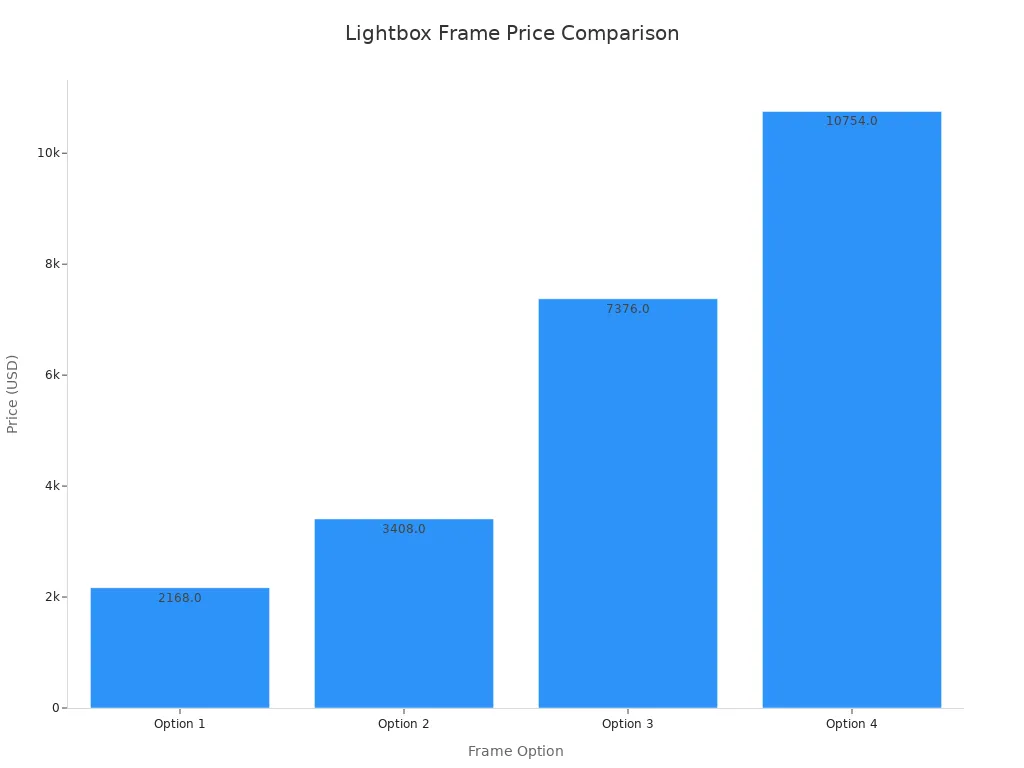
When you plan your art display, you want to know how much you might spend. The right size and shape can change the price a lot. Larger frames cost more, and extra features like LED lighting add to the total. Take a look at this table to see how the size and features affect the price:
Frame Type | Price |
|---|---|
10-Foot Vector Backlit Tension Fabric Light Box Frame | $2,168.00 |
10-Foot Vector Backlit Tension Fabric Light Box Frame | $3,408.00 |
10-Foot Vector Backlit Tension Fabric Light Box Frame | $7,376.00 |
10-Foot Vector Backlit Tension Fabric Light Box Frame | $10,754.00 |
The Slim LED lightbox makes your art stand out and gives your space a bright, modern look.
If you want to save money, pick a simple design and the right size and shape for your art. The SEG Snap!™ system lets you change your art often, which can help you save over time, even if the first price is higher.
Durability and Maintenance
You want your lightbox to last. The best material for a light box is usually aluminum. It gives your frame strength and keeps it looking new. Some frames use 6063 aluminum, which is even better for scratch resistance. Here’s a quick look at how materials affect durability:
Material | Characteristics | Durability Impact |
|---|---|---|
Aluminum | Upscale, rigid, elegant | Long-lasting and strong |
Steel | Good for big frames, more affordable | Not as rigid as aluminum |
Soft Aluminum | Cheaper, scratches and tarnishes fast | Wears out quickly |
6063 Aluminum | Extra strong, resists scratches | Best for long-term use |
Lightboxes with thicker aluminum walls last longer. For easy care, wipe your frame with a soft cloth and check the lights now and then. The best material for a light box also makes cleaning simple.
Installation and Usability
You want to hang your lightbox without trouble. The right size and shape make installation easier. Light frames are simple to move and set up, but heavy frames feel more solid. Here’s a quick guide to help you install your lightbox:
Pick the spot for your lightbox and check for a power outlet.
Use a level and tape measure to mark where the frame will go.
Drill holes and use the right screws or anchors.
Attach the frame and plug it in.
Test the lights and make sure everything looks good.
Feature | Light Frame Benefits | Heavy Frame Benefits |
|---|---|---|
Usability | Easy to move and install | Feels sturdy and premium |
Installation | Quick for events | Needs more effort |
Durability | May be less sturdy | More stable |
Some people find that frames longer than 18 feet can have seams, which may not look as nice. Make sure you pick the right size and shape for your space. If you want to avoid problems like uneven lighting, check that the LEDs are set up right.
Tip: When you think about considerations for selecting the right size and shape, you make your art display look its best and keep things simple for yourself.
When you pick a lightbox frame, focus on what matters most for your art. Think about these key points:
Size and dimensions—make sure your art fits and you have space for storage.
Weight—choose a frame you can handle easily.
Lighting—built-in LED lights make your art shine bright.
Pick a frame that matches your style and needs. Show off your favorite pieces and let your art light up your space! 🎨✨
FAQ
What are the most common sizes of light box displays?
You’ll find common sizes of light box displays like 24"x36", 36"x48", and 48"x72". These fit most posters and art prints. You can check your artwork and pick the size that matches your space and style.
How do I choose the right shape for my light box?
You should look at your art and the room. Rectangle shapes work for posters. Square shapes fit smaller prints. Round shapes add a fun touch. Try different shapes to see what looks best with your art and decor.
Can I install a light box by myself?
Yes, you can set up a diy art light box at home. Most light box displays come with easy instructions. You need a tape measure, a drill, and a level. Snap the frame together, hang it, and plug it in. You’ll see your art shine!
What makes led light boxes better for art?
Led light boxes use less energy and last longer. You get bright, even light that makes your colors pop. Led light boxes turn on fast and stay cool. Your art looks fresh and clear every time you turn on your light box.
Should I get a custom-made light box or a standard one?
If your art fits standard shapes, you can save money with regular light box displays. For unique shapes or special sizes, a custom-made light box works best. You get the perfect fit and style for your space and artwork.
Tip: Always measure your art and space before picking a light box. The right shape and size make your display look amazing!
Feature | Standard Light Box | Custom-Made Light Box |
|---|---|---|
Shape Options | Limited | Any shape |
Fit | Common sizes | Exact fit |
Cost | Lower | Higher |
Installation | DIY | May need help |
See Also
Essential Guide to Selecting Acrylic Light Box Frames
Selecting Ideal Acrylic Panels for Your Light Box Displays
Comparing Frameless and Framed Acrylic Light Box Designs
