DIY vs. Professional LED Light Photo Boxes: Which Option Is Best for Your Needs?

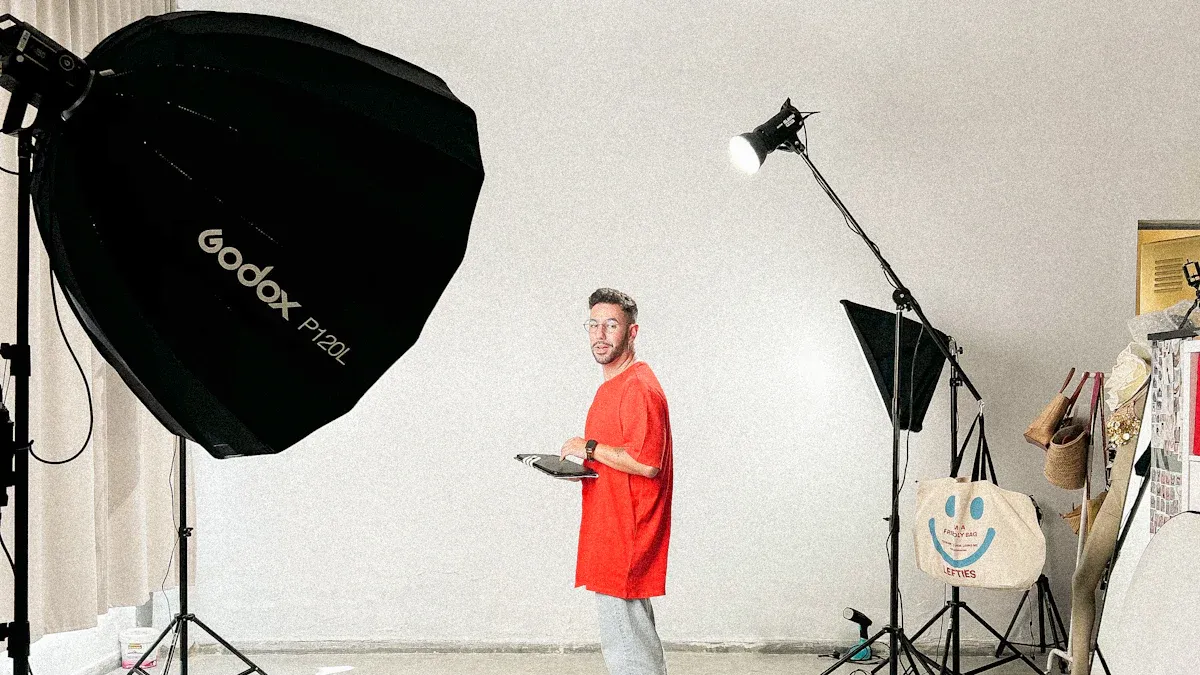
Are you trying to choose between making your own light box or buying a professional LED Light Photo Box? Your choice depends on what is important to you. If you want to save money, making your own might look good because you do not pay for someone to set it up. Do you want to change every part or make it look special? Building your own lets you do that. If you want something you can use right away, professional LED Light Photo Boxes are safe and come with help. You also do not need any special skills. Look at the main differences below:
Decision Factor | Professional LED Light Photo Box | DIY |
|---|---|---|
Cost | Higher | Lower |
Flexibility | Lower | Higher |
Skill Needed | None | Basic |
Safety | High | Varies |
Support | Yes | No |
Think about what you need and what you can do. What is most important to you?
Key Takeaways
Think about how much money you want to spend. DIY light boxes cost less and you can make one for under $10. Professional models cost more but give you better quality.
Think about what you need. DIY light boxes let you change things and are flexible. They are great for people who do this as a hobby. Professional boxes give you the same lighting every time and are easy to use. They are good for people who take photos seriously.
Think about what you can do. Making a DIY light box needs some basic crafting skills. Professional light boxes are ready to use and you do not need any special skills.
Think about how often you will use it. If you take pictures a lot, a professional light box can save you time. It can also give you better results over time.
Pick what fits your goals. If you want to have fun and be creative, try DIY. If you want fast and professional results, pick a professional light box.
What Are LED Light Photo Boxes?
Purpose in Product Photography
You might wonder why people use LED light photo boxes for product photography. These boxes help you take clear and bright pictures of small items. You can use them for jewelry, food, or gadgets. The box creates a mini studio that blocks out shadows and gives your products a professional look. If you sell things online, you want your photos to show every detail. A photo light box makes this easy. You do not need fancy equipment or a big space. You just place your item inside, turn on the lights, and snap your photo. It works for both beginners and experts. You can buy one or make your own, but the goal stays the same—great product photos.
Tip: If you want your products to stand out, use a light box to get even lighting and sharp images.
Key Features of Photo Light Boxes
Let’s look at what makes these boxes special. Every LED light photo box has a few main parts that work together to give you the best results. Here’s a quick table to show you what each part does:
Component | Function |
|---|---|
Lighting | Provides cool, energy-efficient, and daylight-balanced illumination for accurate color reproduction. |
Backdrops | Offers interchangeable backgrounds to enhance product presentation and minimize glare. |
Portability | Ensures easy setup and teardown, especially for frequent use, with compact carrying options. |
You get bright, even lighting from the built-in LEDs. The backdrops let you change the background so your product pops. If you need to move your setup, most boxes fold up and travel easily. Here are some quick facts:
A light box is a compact studio for high-quality product photography.
You can use it for many small items, like jewelry, food, or tech gadgets.
Both store-bought and DIY boxes help you capture product details.
You do not have to be a pro to use these features. Just set up your box, pick a backdrop, and start shooting. Your photos will look clean and professional every time.
DIY Light Box Overview
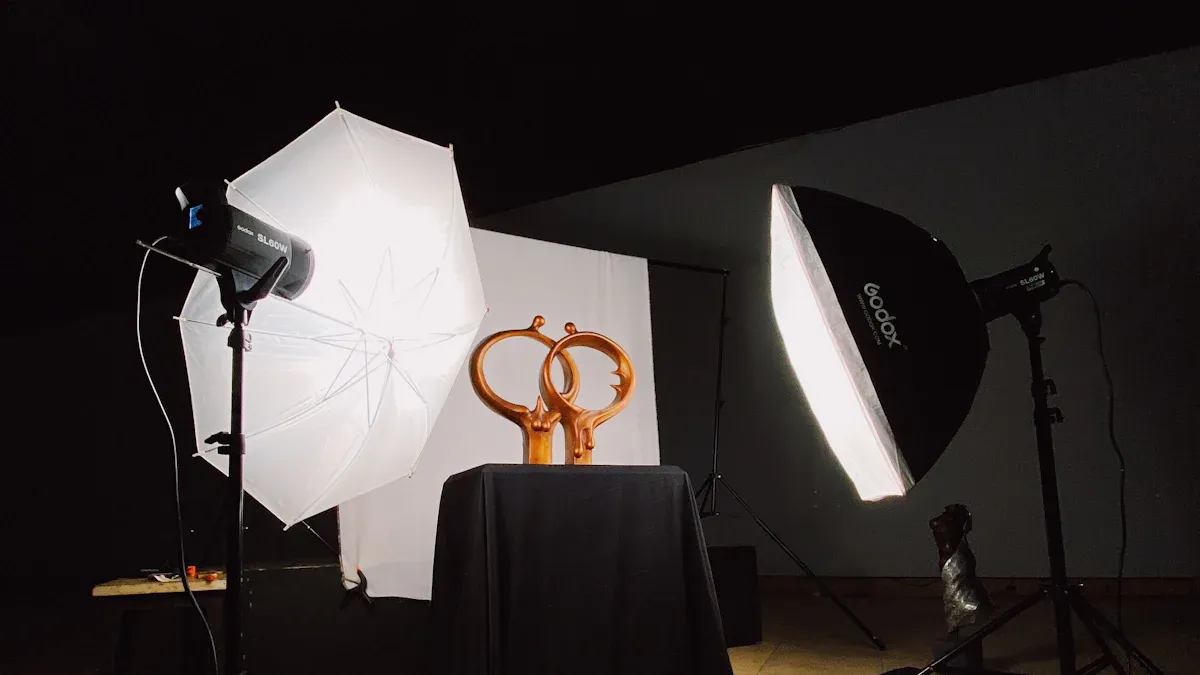
Building a DIY Lightbox
You can build your own lightbox at home with just a few simple supplies. Most people start with a cardboard box. You cut out windows on the sides and cover them with white tissue paper. This helps soften the lighting. You can use long construction paper or white posterboard for the background. Grab a craft knife, scissors, and some double-sided tape or packing tape to hold everything together. If you want to change the look, try different colored card stock or patterned paper. This setup works well for food, still-life, and flower photography. You get a flexible photography setup for almost no cost.
Common materials for a diy light box:
Cardboard box
White tissue paper
Construction paper or posterboard
Craft knife or scissors
Double-sided tape or packing tape
Pros of DIY Light Boxes
A diy light box gives you a lot of freedom. You can change the size, shape, and background to fit your products or food. Many people say it is easy to make, even if you do not have special skills. You can use it for light box photography at any time, day or night. This means you do not have to wait for the sun. You can also fold it up and store it when you finish. Here’s what users like most:
Advantage | User Comment |
|---|---|
Flexibility | "It’s very freeing, not to mention much more productive, to be able to take photos at any time of the day or night and not be dependent upon natural light." |
Improved Image Quality | "I like it for little items like jewelry and such. I’ve noticed that the pictures turn out richer looking." |
Portability | "The one I bought folds up into a small bundle so if I’m not going to take pictures for a few days, I fold it back up." |
Ease of Construction | "...it was super easy to make, even for an unhandy man like myself. If I can do it, anyone can." |
Cons of DIY Light Boxes
You might run into some problems with a diy light box. The lighting can be too harsh or uneven. This can cause headaches or make your eyes hurt. Some people find it hard to get the light just right for high-quality pictures. Building your own lightbox can also be tricky if you are not used to crafts. Here are some common issues:
Harsh, bright light can cause vision problems.
Poor light distribution may lead to uneven lighting.
Construction can be difficult for beginners.
Best For: Hobbyists and Custom Needs
A diy light box works best for hobbyists who want to try light box photography for fun. If you love food photography, still-life photography, or photographing finished dishes, you will enjoy making your own. You can also use it for macro photography or flower photography. You get to customize your lightbox for your own style. If you want even lighting and a flexible setup, this is a great choice for you.
Tip: Try different backgrounds and lighting angles to see what works best for your products or food.
Professional LED Light Photo Boxes
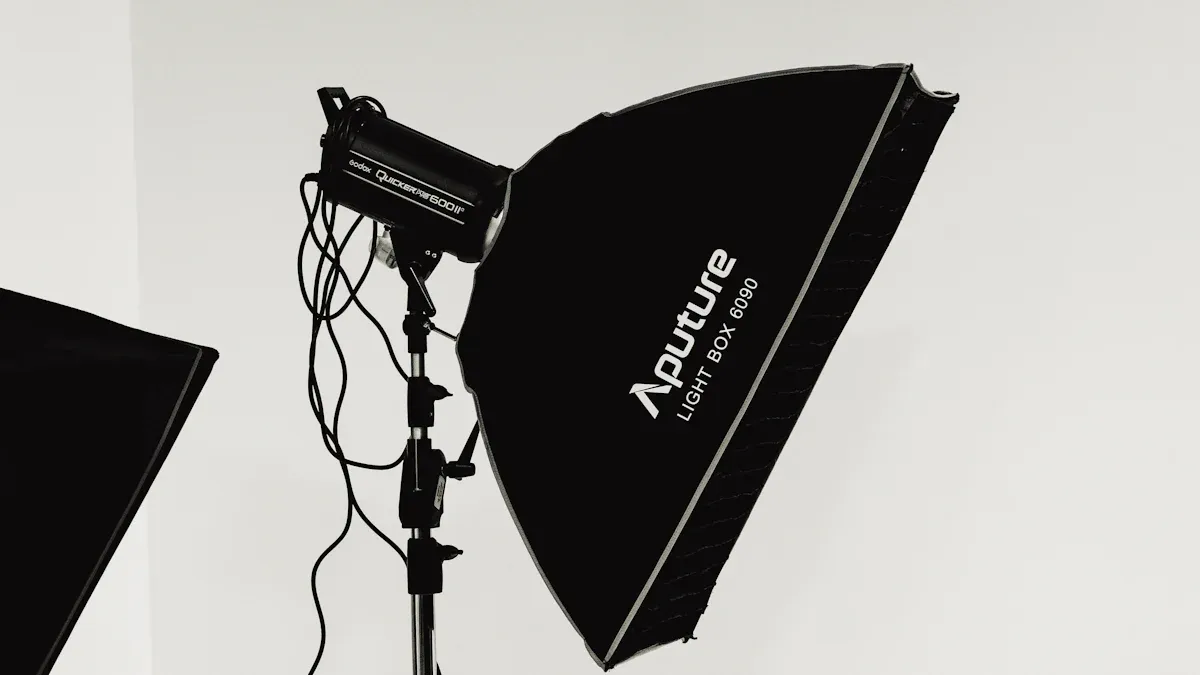
Features of Professional Lightboxes
Professional lightboxes have many smart features. You do not need to build anything. They come ready to use right away. The built-in LED lighting gives bright and even light. You can change the brightness on many models. This helps you control how your photos look. Some photo boxes have software to help you use your camera and lights together. You also get free technical support if you need help. These features make it easy for anyone to use a photo light box.
Pros of Professional Photo Light Boxes
There are many good things about using a professional lightbox. Here are some reasons people like them:
You save time because setup is fast and simple.
The lighting stays the same, so your photos look sharp.
You do not need to make hard changes. The design is easy to use.
You can take clean and color-true photos with little work.
Automation lets you take pictures faster on busy days.
Here is a table that shows why businesses like these photo boxes:
Benefit | Description |
|---|---|
Energy Efficiency | Uses less power, so you save money and help the planet. |
Even Light Distribution | Gives your products a smooth, professional look. |
Long Service Life | LED bulbs last a long time, so you do not need to replace them often. |
UV Protection | Keeps your photos and artwork safe from harmful rays. |
Enhanced Brand Presence | Makes your business stand out and brings back happy customers. |
Increased Visibility | Attracts more people to your store or website. |
Sustainability | LED technology is better for the environment and your wallet. |
Cons of Professional Photo Light Boxes
Professional lightboxes are not perfect. You might have some problems:
Sometimes the lighting can look uneven or too bright.
Lights may flicker if there is a power problem.
If the box gets hot or uses cheap parts, the LEDs may break early.
Dust can build up, so you need to clean your lightbox.
Some people find it hard to connect the controls or fix wires.
Tip: Check your lightbox often and keep it clean for the best results.
Best For: Businesses and Serious Photographers
Professional led light photo boxes are best for people who want great results every time. If you run a business or sell things online, you will like how easy they are. Many stores, restaurants, and event planners use these lightboxes to show off their products. Even people at home use them for art. If you want the best photos for your business or serious photography, a professional lightbox is a good choice.
Comparing DIY vs. Professional Lightboxes
Cost and Budget
When you look at cost, you see a big difference between a DIY lightbox and a professional one. If you want to save money, building your own mini photo studio is the way to go. You can use things you already have at home, like a cardboard box and tissue paper. This makes the price very low. You do not need to spend much to start taking pictures of your products.
Professional LED light photo boxes cost more at first. You pay for the design, the built-in lighting, and the ready-to-use setup. Over time, you may also pay for maintenance. Many companies offer support and repairs, which can help you save money in the long run. Regular cleaning and care keep your mini photo studio working well and help you avoid big repair bills. If you use your lightbox a lot, these services can make a big difference.
Tip: If you only take photos sometimes, a DIY mini photo studio can save you money. If you use it every day for your business, a professional model may cost less over time.
Quality and Lighting Consistency
Quality matters when you want your photos to look sharp and true. DIY lightboxes can give you good results, but the lighting may not always stay the same. You might see shadows or colors that do not look right. It can be hard to get even lighting every time you use your mini photo studio.
Professional LED light photo boxes give you better quality and more consistent lighting. They use special LED drivers that keep the power steady. This means you do not see flicker in your photos or videos. The color in your pictures looks real because these mini photo studios have a high color rendering index. You can also change the brightness without changing the color. This helps you get the perfect shot every time.
Professional mini photo studios give you better color accuracy.
You get flicker-free lighting for both photos and videos.
You can control the brightness and keep the color the same.
If you want the best quality for your products, a professional lightbox is the best choice. If you just want to try food photography or take pictures for fun, a DIY mini photo studio can work well.
Setup Time and Ease of Use
You want to spend your time taking photos, not building your mini photo studio. DIY lightboxes take time to make. You need to cut, tape, and set up the lighting. If you like crafts, this can be fun. If you want to start right away, it can feel slow.
Professional lightboxes come ready to use. You just open the box, plug it in, and start shooting. The controls are simple. You do not need special skills. This makes them great for busy people and photographers who want to save time.
Feature | Professional LED Light Photo Boxes | DIY Solutions |
|---|---|---|
Consistent Lighting | Yes | No |
Ease of Use | High | Variable |
Versatility | High | Limited |
If you want a mini photo studio that works right out of the box, go with a professional model. If you enjoy building things and want to learn, try making your own.
Customization and Flexibility
DIY lightboxes give you the most freedom. You can change the size, shape, and background. You can use different materials to make your mini photo studio look special. You can even add layers or paint the sides for a cool effect. If you want to show off your art or change the look for each photo, a DIY setup is perfect.
You can display your art in new ways.
You can swap out backgrounds or add 3D effects.
You can paint or decorate your mini photo studio for a unique style.
Professional lightboxes do not offer as much customization. They focus on giving you the best quality and easy use. You can change the backdrop, but you cannot change the size or shape. If you want a mini photo studio that fits your exact needs, DIY is the way to go.
Durability and Reliability
You want your mini photo studio to last a long time. DIY lightboxes can work well, but they may not last as long as professional models. Cardboard and tape can wear out. If you use your lightbox a lot, you may need to rebuild it.
Professional LED light photo boxes are built to last. With good care, they can work for 50,000 to 100,000 hours. Some can even last up to 100,000 hours. Regular cleaning and maintenance help them stay in top shape. Many companies offer support if something goes wrong. This makes them a smart choice for people who use their mini photo studio every day.
Professional maintenance can save you money over time.
Regular care keeps your mini photo studio working well.
High-end models last longer and give you steady quality.
If you want a mini photo studio that you can use for years, a professional model is the best pick. If you only need it sometimes, a DIY lightbox can do the job.
Note: Think about how often you will use your mini photo studio. If you need it every week, invest in a professional one. If you only use it now and then, DIY is a good choice.
You see that both DIY and professional lightboxes have their place. Hobbyists and creative people love DIY for the fun and freedom. Small businesses and serious photographers choose professional models for the quality, speed, and support. Pick the mini photo studio that fits your needs and style.
Choosing the Right Lightbox for Product Photography
Assessing Your Needs and Skills
First, think about what you want your lightbox to do. Do you take pictures just for fun, or do you need clear photos for your business? If you want to photograph small things, check the size of the lightbox. Make sure your biggest item fits inside. Look at the type of light and the color temperature. Daylight-balanced bulbs (5500K–6500K) help your photos look real. They make colors look true and bright. If you want soft shadows, pick a lightbox with thick diffusion panels. Some lightboxes let you change how bright the lights are. This gives you more control over your pictures. Removable backdrops can help you work faster and make changes easy.
Criteria | Description |
|---|---|
Size & Interior Dimensions | Pick a size that fits your largest item. Most lightboxes are between 12x12x12 inches and 36x36x36 inches. |
Light Source Type and Color Temperature | Use daylight-balanced bulbs (5500K–6500K) to get natural-looking light and avoid strange colors. |
Brightness Adjustability | Dimmable lights let you control how bright your photos are. This gives you more choices. |
Diffusion Quality | Thicker panels make softer shadows. Check your photos for bright spots. |
Backdrop Options | Removable backdrops make it easy to switch backgrounds and work faster. |
Power Source | USB-powered boxes are easy to use but may not be as bright. AC adapters give more power. |
Ask yourself if you like building things. DIY lightboxes let you change almost everything. If you want something simple and quick, a professional lightbox is ready right away.
Matching Budget and Expectations
Money is important when you choose a lightbox. DIY lightboxes are cheaper. You can make one for just a few dollars. You can use things like boxes and paper from home. This is good if you want to save money and still get nice photos. Professional lightboxes cost more, but they are made with strong materials. The lighting is steady and bright. If you want the best photos, you might want to spend more.
Aspect | DIY Light Box | Professional Light Box |
|---|---|---|
Cost | Can cost over $100 | |
Customization | You can change it to fit your needs | Not many options |
Portability | Light and easy to move | Depends on the model |
Sustainability | Uses old materials | Made with new materials |
Think about how often you will use your lightbox. If you take pictures every day, a professional lightbox may last longer and give better results. If you only use it sometimes, a DIY lightbox can work fine.
Making Your Final Choice
Now, match what you need, what you can do, and how much you want to spend. If you like crafts and want to change things, try a DIY lightbox. You can pick the size, shape, and background. If you want something fast and high quality, choose a professional lightbox. Many photographers use professional models because they work well. You can start with a DIY lightbox and get a professional one later. The best lightbox is the one that helps you reach your goals and fits your style.
Tip: Write down what matters most to you—size, quality, price, or speed. Use your list to help you pick the best lightbox.
Now you know how DIY and professional LED light photo boxes are different. DIY boxes let you change things and cost less money. Professional boxes are fast, give help, and make great photos. People who like hobbies often build their own boxes. People with businesses or who take lots of photos buy ready-made ones. Think about what is most important to you before you choose.
Tip: If you want to make a DIY box, get a cardboard box, tissue paper, tape, and a white poster board. Put your item inside and check the lights before you take pictures!
FAQ
How much does it cost to build a DIY light box?
You can build a DIY light box for less than $10. You just need a cardboard box, tissue paper, tape, and a white poster board. Most supplies come from things you already have at home.
Can I use my phone camera with a light box?
Yes! You can use your phone camera with any light box. Good lighting helps your phone take sharp and bright photos. Just make sure your phone lens is clean before you start.
What size light box should I get?
Pick a light box that fits your biggest item. For jewelry, a small box works. For shoes or gadgets, choose a larger one. Measure your products first so you know what size you need.
Do I need special bulbs for a DIY light box?
You do not need special bulbs. Use daylight LED bulbs (5500K–6500K) for the best color. These bulbs give you bright, even light and help your photos look natural.
How do I keep my light box clean?
Wipe the inside with a soft, dry cloth. Keep dust away from the lights and backdrops. Clean your light box after each photo session for the best results.
See Also
Reasons To Opt For DIY Acrylic Light Box Kits
Exploring Acrylic Photo Light Boxes: Varieties And Uses
Comparing Cast And Extruded Acrylic For Optimal Light Boxes
