How to Choose the Right LED Photo Light Box for Product Photography

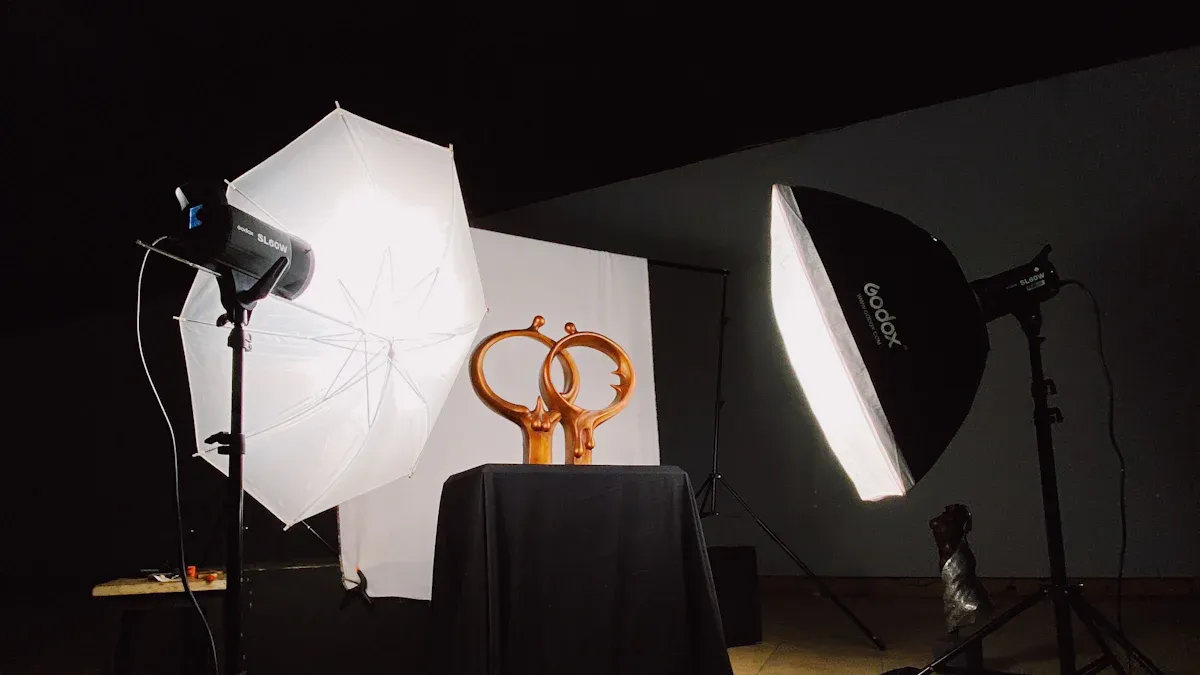
A good light box makes your product photos look sharp and professional. You want a light box that fits your product, not one that feels too tight or too empty. Adjustable brightness helps you control shadows and highlights, so your photos pop. If you plan to shoot different items, pick a light box that gives you enough space to move things around. When you choose the right LED light box, you get better results and save time. Always think about your budget and how much room you have for your light box setup.
Key Takeaways
Pick a light box that matches your product’s size. Make sure there are 2-3 inches of space around your item. This helps stop shadows from showing up in your photos.
Being able to change the brightness is important. It lets you make the light stronger or weaker. This way, your pictures will not be too bright or too dark.
Think about what the inside of the light box looks like. White walls make the light soft. Gray or black walls can help control shadows.
Choose a light box that you can use for many things. Find one with features for shooting different products, like jewelry or electronics.
Try to get good features without spending too much money. Focus on things like changing brightness and having true colors. This helps you get the most for your money.
Why Use a Photo Light Box
Benefits for Product Photography
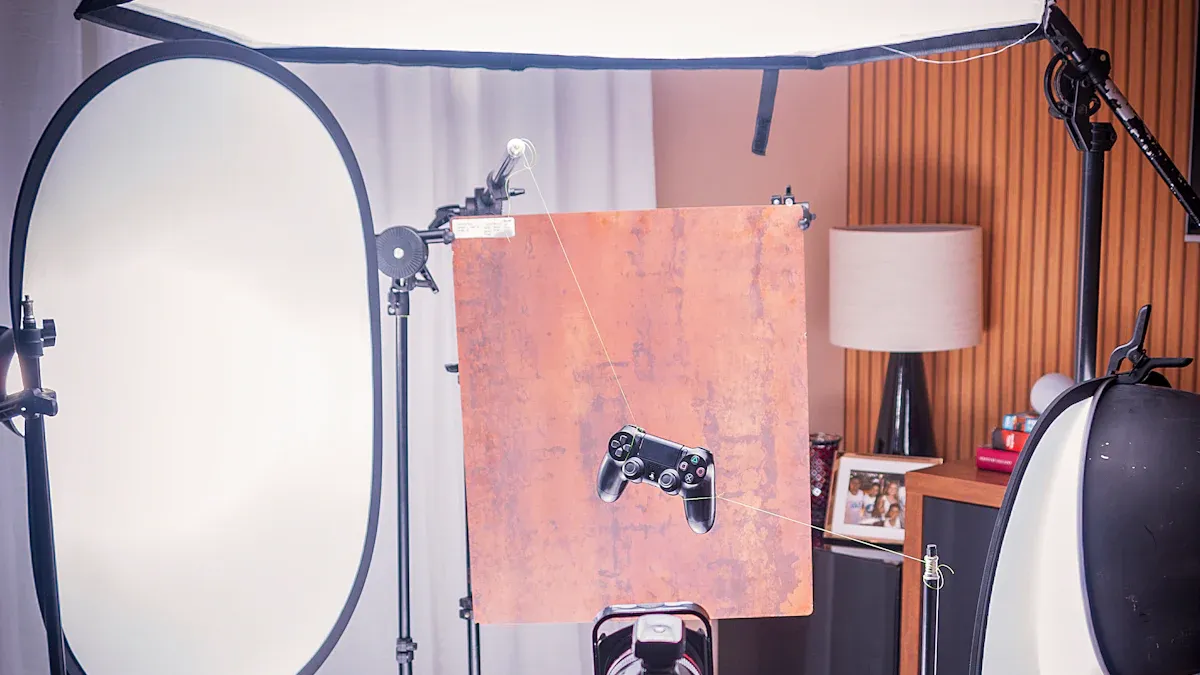
You want your product photos to look sharp and clear. A photo light box for product photography helps you do just that. When you use a photo light box, you capture every detail of your product. You get consistent lighting that covers the whole object. This means you do not have to worry about harsh shadows or uneven spots in your photos.
A photo light box gives you professional-quality photos with a plain background.
You can show off your product’s true colors because the lights stay the same every time.
The lights help you highlight textures and small features that might get lost with regular lighting.
You get to control the brightness and direction of the lights, so your photos always look their best.
If you want your photos to stand out, a photo light box for product photography is a smart choice.
How Light Boxes Improve Lighting
Lighting can make or break your photos. With a photo light box, you get soft, even lighting that wraps around your product. The lights inside the box spread out and fill in shadows. You do not have to chase the sun or wait for the perfect time of day.
Here’s how a photo light box compares to natural lighting:
Benefit | Artificial Lighting (Light Box) | Natural Lighting |
|---|---|---|
Control over lighting conditions | Yes | No |
Reduction of harsh shadows | Yes | No |
Consistency across shoots | Yes | No |
Usability in low-light situations | Yes | Limited |
Portability and setup flexibility | Yes | No |
You also get better color accuracy with a photo light box. The lights use daylight-balanced LED panels, which means your photos show true colors. High-quality lights with a Color Rendering Index (CRI) of 95 or more make sure your product looks real. The materials inside the box help diffuse the lights, so you get soft, shadowless photos every time.
Tip: Adjust the white balance on your camera to match the lights in your photo light box. This helps your photos look even more natural.
Photo Light Box Features
Adjustable LED Brightness
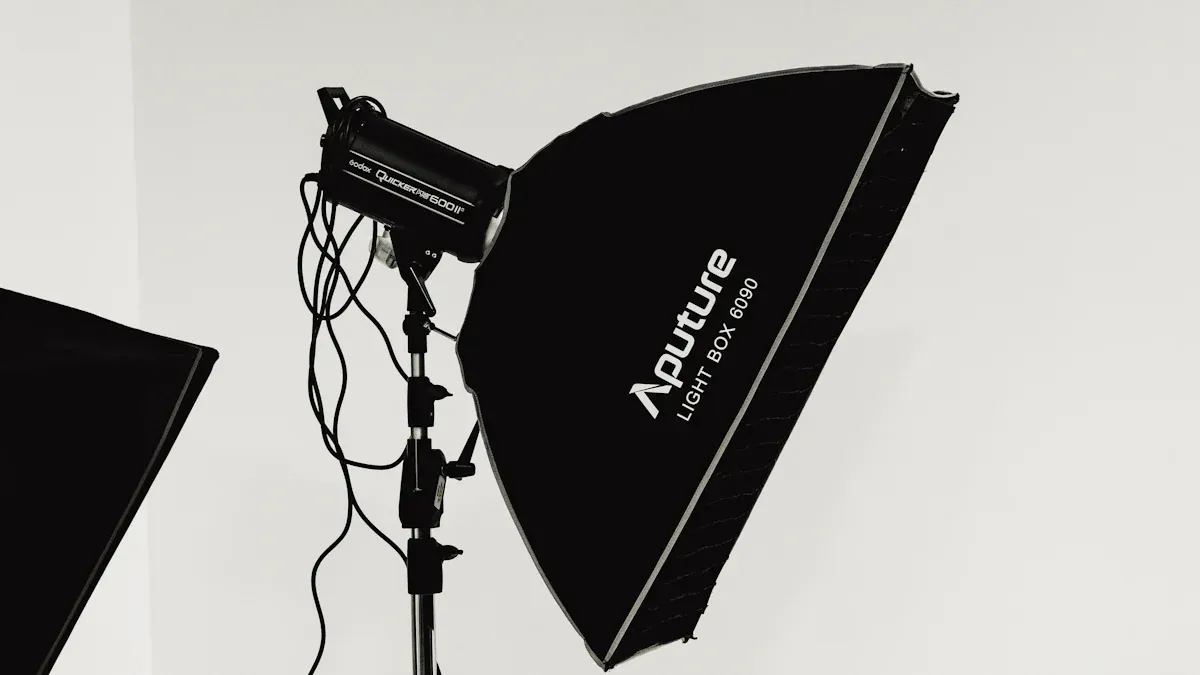
You want your product photos to look their best every time. Adjustable LED brightness gives you control over how much light hits your subject. This feature helps you avoid photos that look too bright or too dark. When you can change the light intensity, you make sure every detail stands out. You also keep the colors true and the soft light even across your product.
You can fine-tune the brightness to match the mood you want.
You avoid overexposed or underexposed shots.
You keep your product’s colors and textures looking real.
You get consistent quality in every photo.
Here’s a quick look at what most LED photo light boxes offer:
Feature | Description |
|---|---|
Adjustable Brightness | Yes, with color temperatures ranging from 3000K to 5600K |
Number of LED Beads | 120 |
Color Rendering Index (CRI) | 95+ |
With these features, you get soft, quality lighting that makes your products shine.
Size and Space Considerations
Picking the right size for your photo light box matters. You need enough room to move your product and camera around. A good rule is to choose a box at least 12 inches larger than your biggest item. This gives you space for soft light to wrap around your product and helps you capture different angles.
Check your workspace before you buy.
Make sure the box fits without crowding your area.
Larger boxes work well for big items but take up more space.
Foldable boxes are great if you need to save room.
You want your setup to look neat and feel easy to use. The right size helps you get quality photos with soft, even lighting.
Interior Surfaces and Light Quality
The inside of your photo light box changes how your photos look. White walls bounce soft light around, making shadows less harsh. Sometimes, white can cause unwanted reflections, so you might try gray or black walls for more control. Colored walls can change the mood of your photos, but neutral colors like white, gray, or black give you the best quality and control over shadows.
White walls create soft, even light but may reflect too much.
Gray or black walls help you manage shadows and highlights.
Colored walls add mood but can affect the quality of your product images.
If you want soft, quality lighting, pay attention to the inside surfaces of your photo light box. Foamcore panels work well for creating smooth, soft backgrounds and boosting the overall quality of your photos.
Light Box Types Compared
Foldable vs. Rigid Designs
When you shop for the best photo boxes, you will see both foldable and rigid designs. Foldable light boxes work well if you need something easy to carry or store. You can set them up in seconds and pack them away just as fast. Rigid boxes feel sturdier and protect your gear better, but they take up more space.
Here’s a quick look at how they compare:
Design Type | Durability Characteristics | Ideal Use Case |
|---|---|---|
Rigid Boxes | Made from thick, dense chipboard; resists crushing and impact; great for fragile products | High-end and luxury products |
Folding Cartons | Made from thin paperboard; more vulnerable to damage; cost-effective for lightweight goods | Budget-friendly packaging for lighter items |
For portability, foldable boxes win. You can store and carry them with ease. Rigid boxes stay in shape and protect your items, but they are less portable.
Type | Portability Description |
|---|---|
Foldable | Easy to store and carry; quick setup and packing away. |
Rigid | Sturdy and maintains shape; offers better protection but less portable. |
Tip: If you move your setup often, a foldable box saves you time and space.
Built-in vs. External LEDs
You want your photos to look bright and clear. The best photo boxes use built-in LEDs for several reasons:
LEDs last a long time, so you do not need to replace them often.
Many built-in LEDs have batteries, so you can shoot anywhere.
Bi-color LEDs let you change the light temperature for different looks.
Built-in LEDs can last over 50,000 hours. That means you could use your light box for more than 11 years if you shoot 12 hours a day! External LED setups usually last 5 to 10 years because they can overheat. Built-in LEDs also beat old fluorescent bulbs, which burn out quickly and need lots of care.
Specialty Light Boxes
Sometimes, you need a light box for a special job. Commercially available light boxes come in many shapes and sizes. Some work best for jewelry, food, or shiny products. You can find kits with LED lights that make small items sparkle. Taffeta gives you soft shadows and smooth reflections, perfect for stainless steel. China silk helps control reflections and makes textiles and jewelry look great. Large softboxes create big, soft reflections, while small ones highlight details. China silk also works well for food and textured items.
Note: Specialty light boxes help you control light for tricky products. Try different materials to see what works best for your photos.
Choosing the Right LED Photo Light Box
Matching Box Size to Products
When you choose the right led photo light box, size matters more than you might think. You want your product to fit inside the box with room to spare. If your item touches the walls, you get unwanted shadows and reflections. Always check the interior measurements, not just the outside. Give your product at least 2–3 inches of space on all sides. This space lets you move your camera and adjust angles without bumping into the walls.
Here’s a simple table to help you match box size to your product:
Criteria | Description |
|---|---|
Size & Interior Dimensions | Pick a box based on the largest item you plan to shoot. Standard sizes range from 12x12x12 inches to 36x36x36 inches. |
Define Your Use Case | Think about what you shoot most—jewelry, electronics, or cosmetics. Choose the right led box for that size. |
Check Internal Measurements | Make sure you have at least 2–3 inches of clearance around your product for best results. |
The depth of your light box also matters. A deeper box spreads light more evenly and helps you avoid harsh spots. For most product photography, a depth of 10cm or more works well. If you work with bigger items, you may need a box with more support. Smaller boxes fit tight spaces and work for small products like rings or watches.
Tip: Always measure your largest product before you buy. This way, you choose the right led box and avoid surprises.
Balancing Features and Budget
You want to choose the right led photo light box without breaking the bank. Start by listing the features you need for your product photography. Adjustable brightness and color temperature help you control the look of your photos. High color rendering index (CRI) ratings make sure your product colors look real. If you plan to shoot in different places, look for a box that folds up or has a slim design.
Here are some things to think about when you balance features and budget:
Adjustable brightness lets you fine-tune the light for each product.
High CRI (95+) gives you true-to-life colors in your photography.
Slim led boxes look modern and fit small spaces.
Built-in LEDs last longer and use less energy.
Larger boxes cost more but give you more room to work.
You do not need every feature. Focus on what helps you most in your product photography. If you shoot small items, a compact box with good lighting works great. For bigger products, invest in a sturdy box with more space and stronger lights.
Note: You can always upgrade later. Start with what you need now and add features as your photography grows.
Versatility for Different Projects
When you choose the right led photo light box, think about how many types of product photography you want to try. A versatile box lets you shoot jewelry one day and electronics the next. Look for features that make your setup flexible and easy to use.
Here’s a table showing what makes a light box versatile:
Feature | Description |
|---|---|
Spreads light evenly, so you avoid glare and harsh shadows. | |
Professional Appearance | Gives you a clean background that makes your product stand out. |
Ease of Use | Sets up quickly, even if you are new to photography. |
Versatility | Fits many products, from small rings to medium-sized gadgets. |
Adjustable parts make your light box even more useful. You can change the light intensity and color temperature to match your product. Try warmer tones for a cozy feel or cooler tones for a modern look. High CRI ratings and adjustable brightness help you get the best shot every time.
Adjustable light intensity and color temperature let you create different moods.
You can experiment with settings to find what works for each product.
A versatile box saves you time and money because you do not need a new box for every project.
Callout: If you want to grow your product photography skills, choose the right led box with adjustable features. You will get better photos and more creative options.
Choosing the right led photo light box comes down to matching size, picking the features you need, and making sure your setup works for all your photography projects. Take your time, measure your products, and think about how you want your photos to look. When you choose the right led box, you make product photography easier and more fun.
DIY Light Box Options
Making Your Own with Foamcore
You can build your own mini photo studio at home with just a few simple supplies. This project lets you create a custom-sized mini photo studio that fits your products perfectly. You do not need fancy tools or expensive gear. Here’s what you need for your DIY mini photo studio:
Cardboard box or cardboard sheets
Foamcore panels
Tissue paper
3 desk lights
Gradient paper for the background
A knife
A straight edge
Duct tape
Start by cutting windows in the sides of your box or foamcore panels. Cover these windows with tissue paper to soften the light. Place your mini photo studio near three desk lamps—one on each side and one on top. Add gradient paper inside for a smooth background. Use duct tape to hold everything together. You can adjust the size of your mini photo studio to fit anything from jewelry to small gadgets.
Tip: Foamcore makes your mini photo studio sturdy and lightweight. You can move it around your workspace with ease.
DIY vs. Store-Bought Light Boxes
You might wonder if a homemade mini photo studio works as well as a store-bought one. Let’s look at the differences. Building your own mini photo studio costs about $15. A store-bought mini photo studio can cost $70 or more. That’s a big difference if you want to save money.
Here’s a quick comparison:
Metric | DIY Light Box | Commercial Light Box |
|---|---|---|
Light Consistency | 92% | 95% |
Color Accuracy | ΔE 3.2 | ΔE < 5 |
Setup Time | 2 minutes | 8 minutes |
Adaptability | High | Moderate |
A DIY mini photo studio gives you almost the same light consistency and color accuracy as a commercial one. You also set it up faster and can change the size or shape when you need. Store-bought mini photo studio kits look more polished and may last longer, but you lose some flexibility.
Note: If you want to try product photography or need a custom size, a DIY mini photo studio is a smart choice. You can always upgrade to a store-bought mini photo studio later.
You want high-quality pictures that grab attention and boost your sales. Start by learning basic lighting terms like shutter speed and color balance. Good light management helps you avoid shadows and reflections. Always check for color accuracy because it shapes how customers see your products. Make a list of must-have features, set your budget, and decide if you want to build your own or buy a ready-made box. Explore online guides or photography forums for more tips.
FAQ
How do I clean my LED photo light box?
You can wipe the inside with a soft, dry cloth. For stubborn spots, use a damp cloth. Avoid harsh cleaners. Keep the LEDs dry. Clean your box often to keep your photos looking sharp.
Can I use my smartphone for product photography in a light box?
Yes, you can! Most smartphones work well with LED light boxes. Use your phone’s camera app. Adjust the exposure and focus. Try different angles. You will get clear, bright product photos.
What size light box should I buy for jewelry?
Pick a box at least 12 inches wide. This gives you space to move your jewelry and camera. Small boxes work best for rings, earrings, and watches. Measure your largest piece before you buy.
Do I need extra lights with my LED photo light box?
Usually, built-in LEDs give enough light. If you want more control, add desk lamps or ring lights. Place them outside the box. Try different setups to see what works best for your products.
See Also
Selecting Ideal Acrylic Panels for Your Light Box Displays
Finding the Best Wall Mount System for LED Light Boxes
Creating the Perfect Light Box for Acrylic Art Displays
Capturing Stunning Images with Acrylic Light Box Photography
